







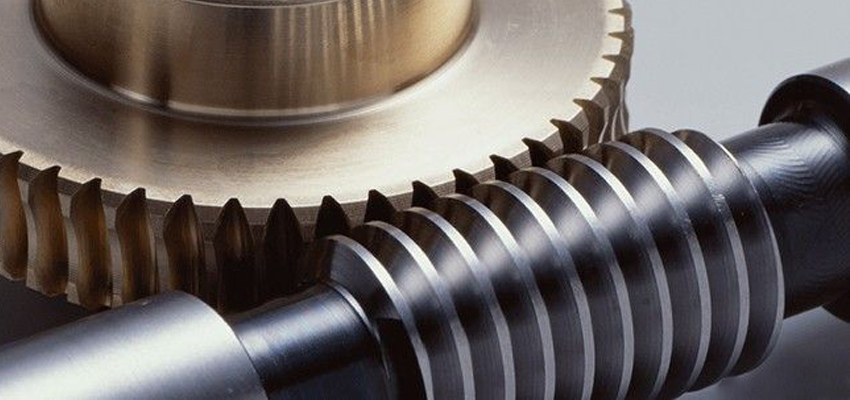
The Anti-Friction Solid-Film Coatings (ASCs) are getting used more and more active in machine building.
It is conditioned by their high technological efficiency, easy way of applying (by painting method), capability to provide resource lubrication, and to create the friction units that need no maintenance.
They are used in valve engineering in the following pairs: gate-saddle of the sliding valves, lead screws, slidingbearings, globe valves, gearwheels of the drives, threaded connections of the pipes, and in other heavy loaded friction units.
This article considers the Anti-Friction Solid-Film Coatings advantages, possible limitations on their use, and the ways to overcome them.
Composition and features of the classical coatings
An Anti-Friction Solid-Film Coating traditionally consists of the solid lubricating material of the layered crystalstructure (molybdenum disulfide), an organic binding resin (epoxy, phenolformaldehyde, acrylic, etc.), and an organic solvent.
The molybdenum disulfide in the composition gives the coating its characteristic grey colour with metallic gleam (see Fig.1), provides low friction and excellent extreme pressure properties.
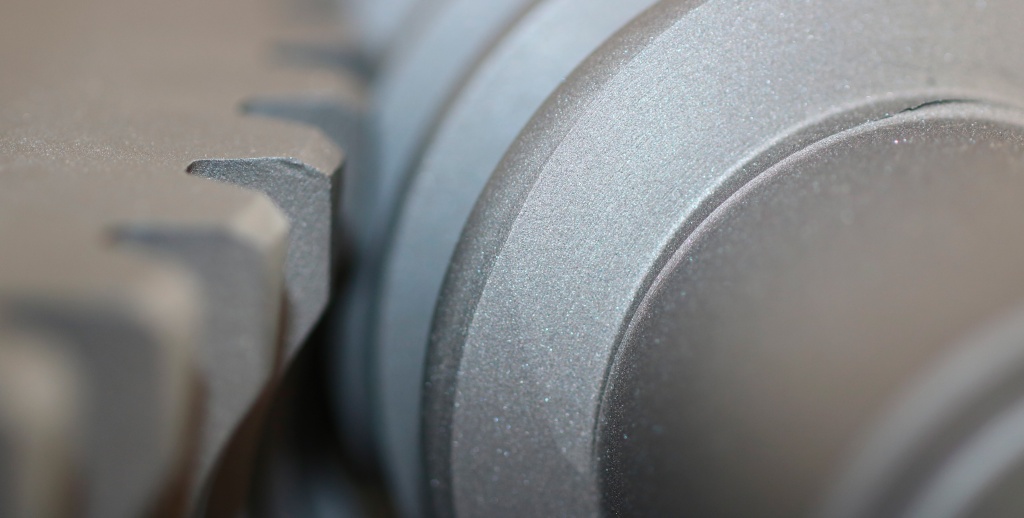
Fig. 1. Appearance of the coating with molybdenum disulfide on the worm-and-worm gear pair parts.
The significant limitation on use of an coatings based on molybdenum disulfide is the fact that MoS2 starts to oxidizeintensively at temperatures above +400 ºС, and organic resins are subject to destruction.
When molybdenum disulfide is oxidized, molybdenum trioxide forms, and it has none of lubricating propertiesalready but instead the abrasive ones. It can be clearly seen on the photo below (see Fig.3) – at the same time the colour of the coating changes from grey into yellow.
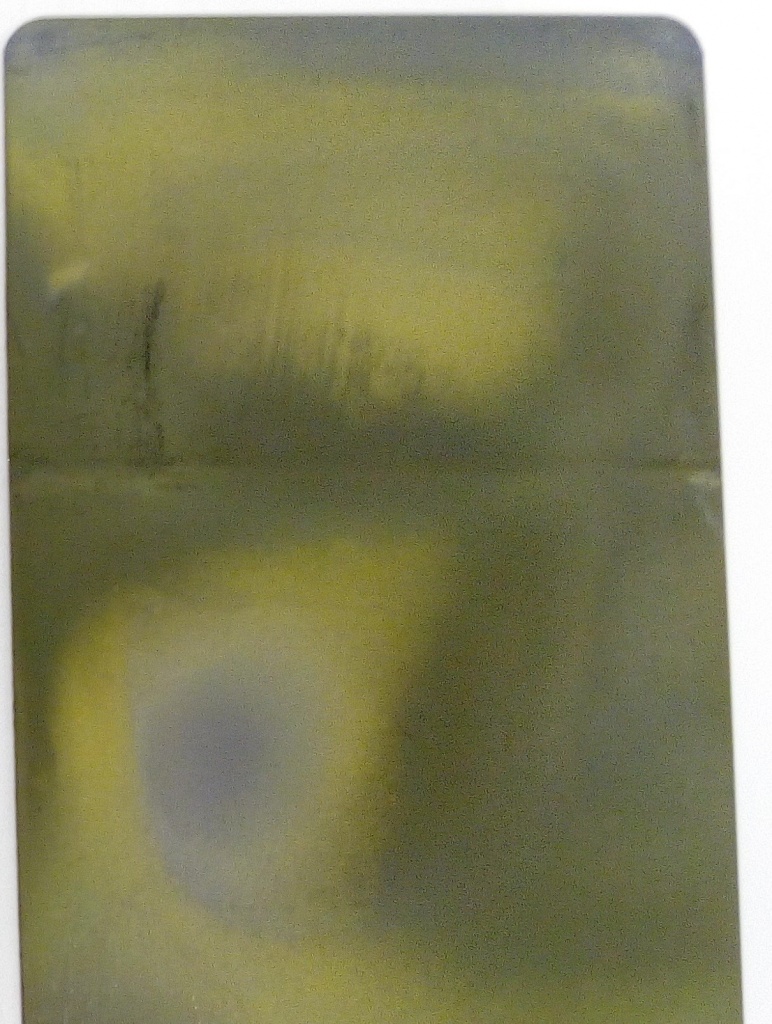
Fig. 2 Oxidation of molybdenum disulfide in the coating composition (grey) with forming molybdenum trioxide(yellow) at heating above +400 ºС
Most coatings lose their adhesion in the environment of acids and liquid oxygen, and when sliding speed growsabove 0.5 m/s, coating wear intensity increases abruptly.
So, the classical coatings are efficient for slow-speed friction units only.
However, a number of units – for example, those of the pipeline valves and turbines – operate at temperaturesabout +500 ºС which makes not onlyAnti-Friction Solid-Film Coatings impossible to be used in them but any other conventional lubricating materials either.
In connection with this, the task on reducing friction and wear in the units operating at high temperatures,speeds, and in chemically aggressive media is quite relevant.
Advantages of MODENGY Anti-Friction Solid-Film Coatings
To overcome the limitations pointed above and to enlarge the fields of application of the Anti-Friction Solid-Film Coatings, the russian Modengy company has developed the series of coatings using the fundamentally different components.
The binding substance in them has inorganic nature – it has been created based on a combination of metal salts.The composition of the specially synthesized graphite and tungsten disulfide is used as the solid anti-friction component. Additionally, reinforcing and stabilizing elements were inserted.
One of such coatings based on the new formula – MODENGY 2560 – has already found an application for it atproduction of the domestic equipment.
In comparison with the classical coatings based on molybdenum disulfide, it has the following advantages:
- Thermal resistance up to +500°С
- Resistance to acids
- Operability in a liquid oxygen medium
- Improved adhesion
- Resistance to wear
- Efficiency both at low and high sliding speeds (0 to 20 m/s)
The coating structure and the substrate-coating transition zone are presented on Fig.3.
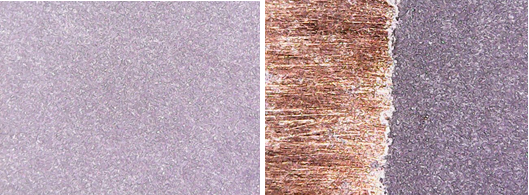
Fig. 3. MODENGY 2560 coating structure, and the transition zone at x500 magnification
MODENGY 2560 coating test results, and fields of application
Molykote 3400A, one of the most thermal resistant coatings available on the market of lubricating materials, hasbeen chosen to be compared with the new MODENGY 2560 coating. The compound based on molybdenum disulfide and binding epoxy resin has the service temperature upper limit of +430 ºС.
The laboratory tribotechnical trials of the coatings were held on the parts made of Inconel 750 alloy according to the ‘spherical indenter of 14mm radius – a flat sample with the coating’ scheme at load of 20 N.
An extract from the test results is quoted in Table 1
Table 1. The comparative laboratory tests results of the sample covered with different coatings, and withoutthem
| Coating Name | Service temperature range, °С | Wear spot diameter, mm | Without any coating |
|---|---|---|---|
| Molykote 3400A | -200…+430 | 1,3 | 0,159 |
| MODENGY 2560 | -200…+500 | 0,7 | 0,112 |
| Without any coating | - | - | 0,337 |
The other kinds of Anti-Friction Solid-Film Coatings available on the market were undergone to the same testing. The test results has revealed that the new MODENGY 2560 coating exceeds the existing analogues not only on thermal resistance but also on tribotechnical properties.
At the present, MODENGY 2560 coating has been approved and is successfully used on the petal gas-dynamicbearings of turbines, and on high temperature pipeline fitting (see Fig.4).
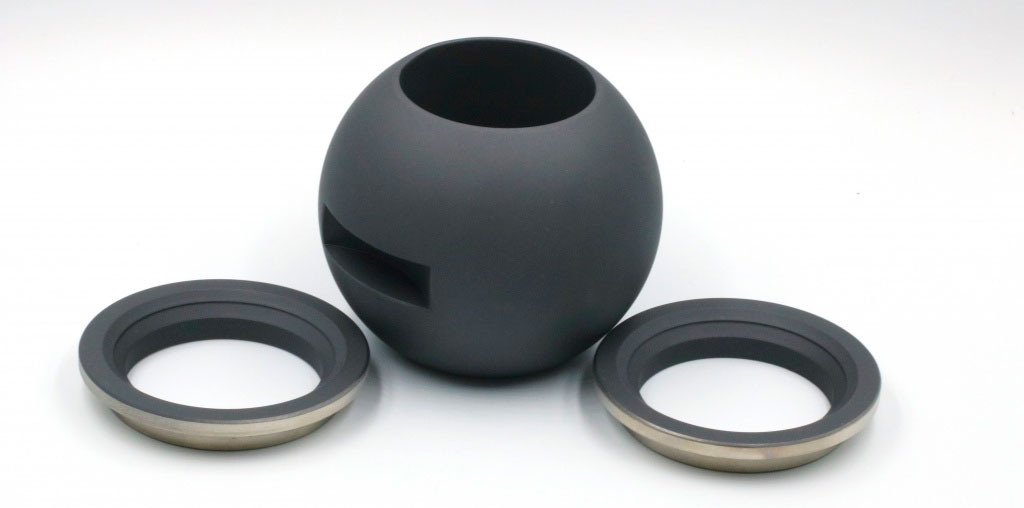
Fig. 4. The ball and the metal saddles of the valve for temperature of +500 °С covered with MODENGY 2560
It is no less effective for the friction units operating in the media of acids, liquid oxygen, and other aggressivesubstances.
Conclusion
The series of the coatings designed by the Russian Modengy company based on the new compositive formulaenables to enlarge the fields of application for the solid lubrication technology under conditions of high temperatures, high sliding speeds, and aggressive working media.
The technology of MODENGY Anti-Friction Solid-Film Coatings provides the surfaces with required complexof tribotechnical and protective properties.
For more detailed information, and to get a consultation, please contact our experts.
Request information