







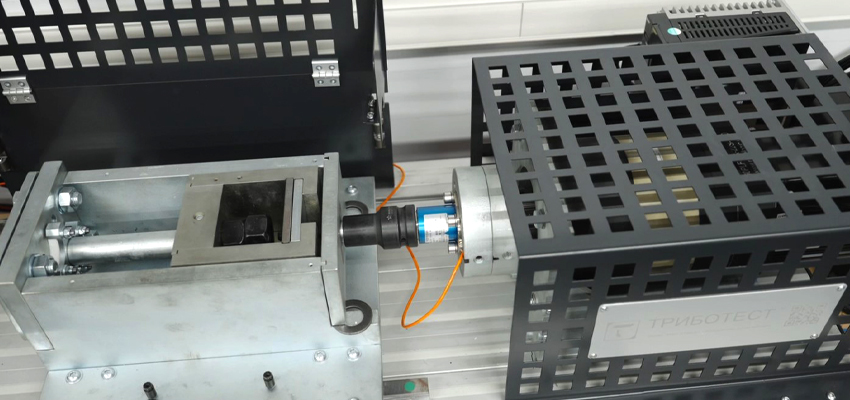
Relevance of carrying out threaded connections testing
At designing and assembling highly reliable units, friction in the threaded connections can be a weak point.
The issue is that only 10 to 20 % of the applied torque are spent to create useful axial thrust while the rest 80 to 90 % are spent to overcome friction forces. At identical tightening torque, actual tension in the bolt body can vary within the range of ±30 % or more because of the local changes of the tribotechnical conditions.
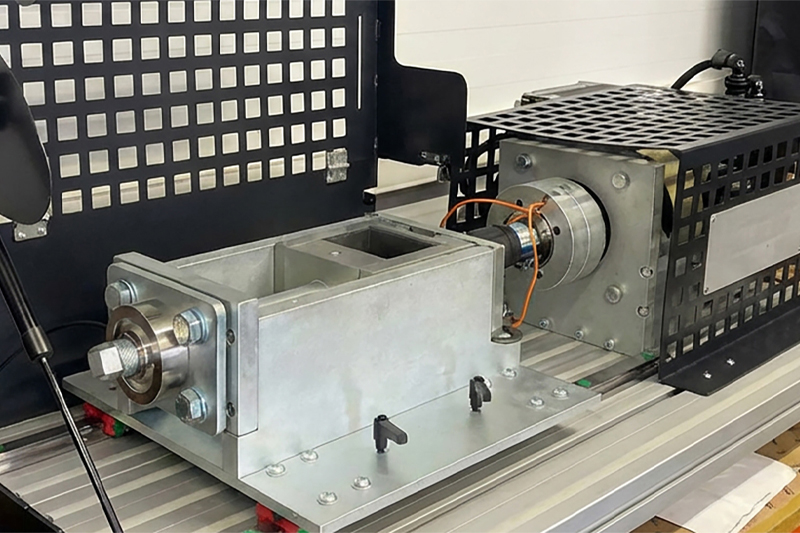
Fig. 1. General appearance of the test bench
An error in determining real pre-tension force can cause loss of sealing, fatigue fracture of the fastener, or critical failures what is inacceptable for the facilities in the oil and gas industry, reinforcement engineering, energy, capital construction, etc.
The Modengy Testing Center whose capabilities allow to predict operational properties of the friction units on the stage on designing operates in Bryansk town. It assists the industrial enterprises to estimate such important parameters as friction coefficient, wear intensity, frictional heating, anticorrosive properties.
The Center has been supplemented with new equipment for testing threaded fasteners (see Fig.1): a special test bench certified for meeting GOST ISO 16047-2015 Standard titled Testing Torsion Torque And Pre-Tension Force.
The Modengy Testing Center, and testing fasteners
Obtaining verified data for engineering calculations requires application of the high class accuracy certified equipment (see Fig. 2).
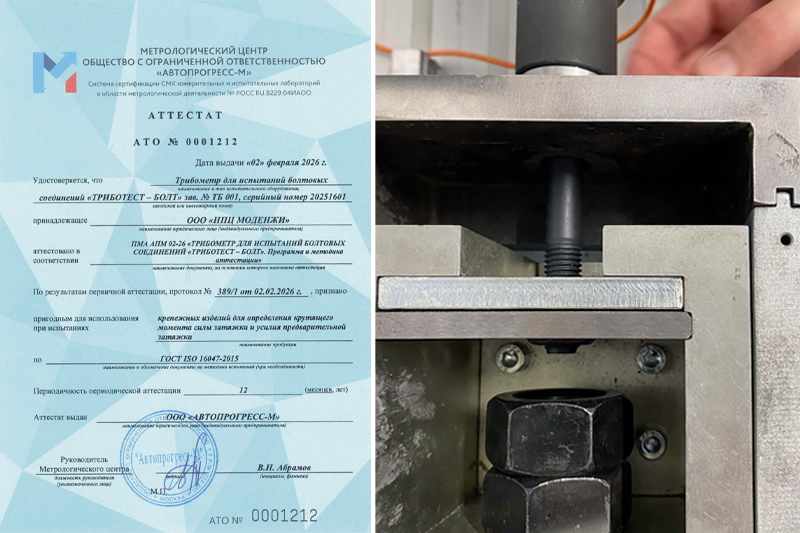
Fig. 2. The Certificate for test equipment (on the left), and the process of testing fasteners treated with anti-friction coating (on the right)
Testing threaded fasteners with in-depth analysis of friction coefficients is the unique service of the Modengy Center (see Fig. 3).
These tests enable to determine not only general friction coefficient but also separately do friction coefficients in the thread and on the bolt or nut bearing surface.
The capabilities of the Modengy Testing Center also allow to determine torsion torque, pre-tension force, general friction coefficient, torsion coefficient (k-factor).
The uniqueness of the Modengy test equipment for threaded fasteners includes:
- Gauging not only general friction coefficient but also separately friction coefficients in the thread, and on the bolt or nut bearing surface
- Possibility to make and to study the graphs of friction coefficient dependence on tightening force, to examine in dynamics the lubricating materials and various coatings influence onto friction processes in the connection and its final properties
- The process of screwing the threaded connections on the test bench for testing bolted joints is automated, and due to that uniform tightening without errors is provided unlike on the test benches with manual bold tightening
The key advantage of the bench tests is complete automation of the process. Unlike manual tightening where stick-slip effects and unstable angular velocity are inevitable, the automated system provides perfect loading uniformity.
Why is it important to gauge friction coefficients separately?
Studying friction in the threaded connections with separate analysis of friction coefficients in the thread and on the bolt or nut supporting surface enables to calculate with high accuracy threaded fastener tightening torque for particularly critical structures according to many Russian and foreign standards including ASME-PCC-1 Standard for bolted flange joints.
This Standard directly recommends to use the calculated models based on separate friction coefficients since only such approach enables to provide tightness of the systems under conditions of high pressures and thermal expansions, to cut down or exclude risk of leaking.
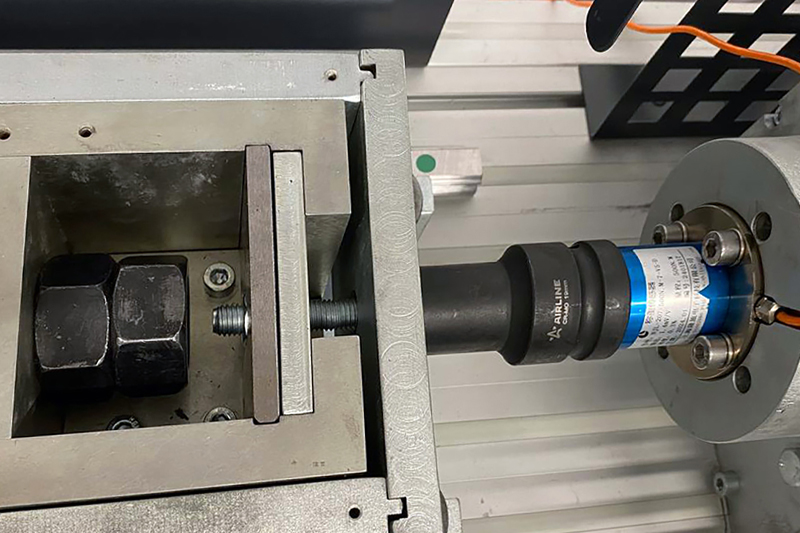
Fig. 3. The test unit
The data gained in process of testing on the Modengy’s test bench is directly integrated into calculated formulas of ASME-PCC-1 and other Russian and international Standards. This eliminates need in using tabular values allowing to adapt tightening torque to a certain materials pair and a coating type.
Separate accounting friction coefficients in the thread and on the bolt or nut supporting surface allows engineers to accurately predict behavior of the unit, and to avoid areas of critical tension concentration.
Such accuracy is the indispensable condition of industrial safety for international and modern Russian projects.
Conclusion
Besides researching friction in the threaded connections, the Modengy’s test laboratory experts fulfil tribological tests for friction pairs according to ASTM G99 Standards (see Fig. 4), study anti-wear properties according to the Reichert Method as well as hold corrosion tests in the salt mist chamber according to ISO 9227 Standard.
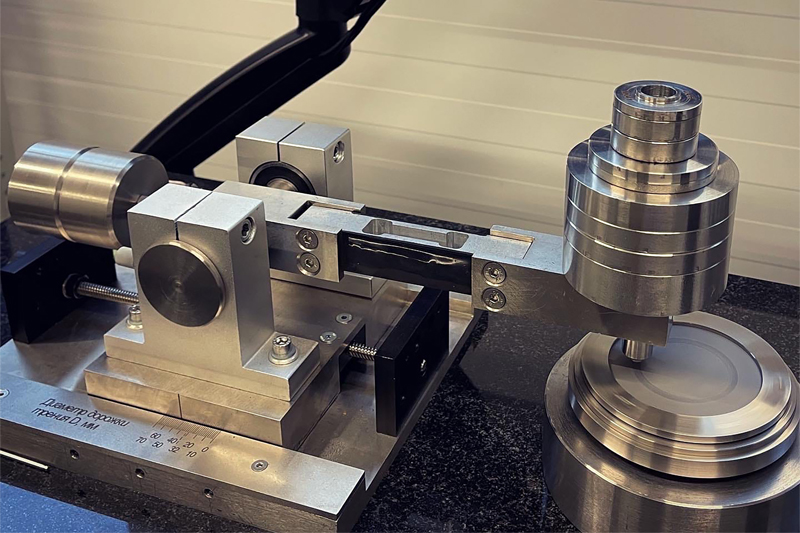
Fig. 4. Tribometer for testing according to ASTM G99 Standard
To prognosticate the service lifetime of the friction units on the stage of designing them, to provide maximal reliability of operating, the required friction parameters and wear intensity, please, contact the Modengy company.
Source: Increasing reliability of equipment assembly: testing threaded fasteners with in-depth analysis of friction coefficients at the Modengy Testing Center - 2026 - No. 1 (142). С. 26-27
27.02.2026