







Motor machines variators purpose and structure
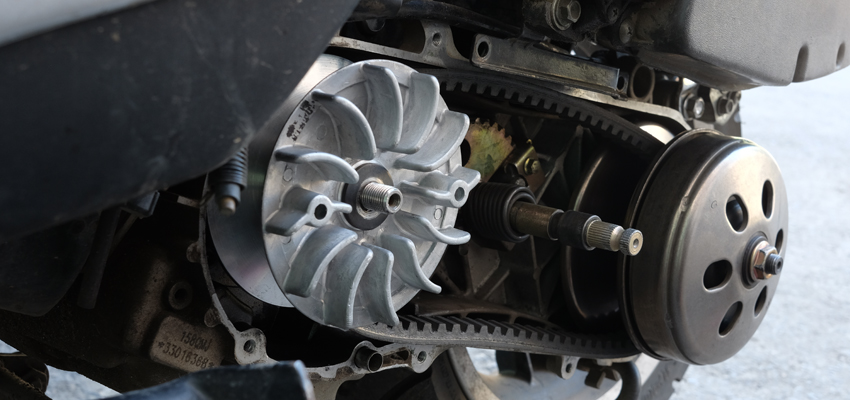
Variator is a component part of transmission that is intended to provide required motion speed of the motor transport.
The basic elements of the variator are two pulleys, and a belt stretched between them.
The driving pulley consists of two parts: a movable cheek and a non-movable cheek (disks). The movable cheek has a set of rollers, and due to them, moves along the crankshaft axle when centrifugal force is changing.
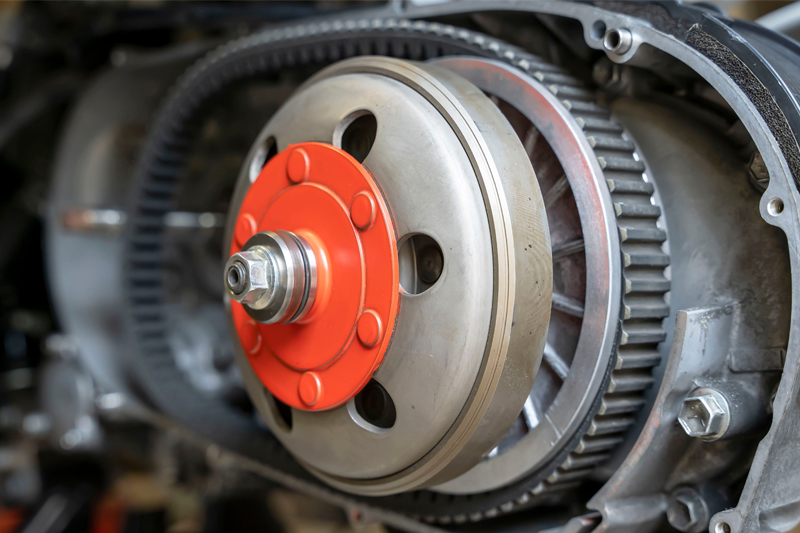
Image source: audiznam260921 /www.shutterstock.com/ru
On the driven pulley (torque driver), a spring is set instead of the rollers which is responsible for moving the movable disk relatively the axle of the reducer primary shaft.
Motion of the variator disks affects the belt position. The closer the parts are, the closer the belt is to outside edge of the pullers. When these components are getting far from each other, the belt is moving towards the axle.
When motor rotations grow the driving pulley’s diameter is getting bigger (the disks are getting compressed) while the driven pulley’s one is getting smaller. High torque moment is achieve due to the reverse process. The diameters of both pulleys are changing in a synchronous way.
Variator functioning troubles
In process of operating, severe friction arises between the rollers and the movable disks. Because of this risk of mechanism jamming increases, transmission operation makes difficult, smooth going of the parts gets lost.
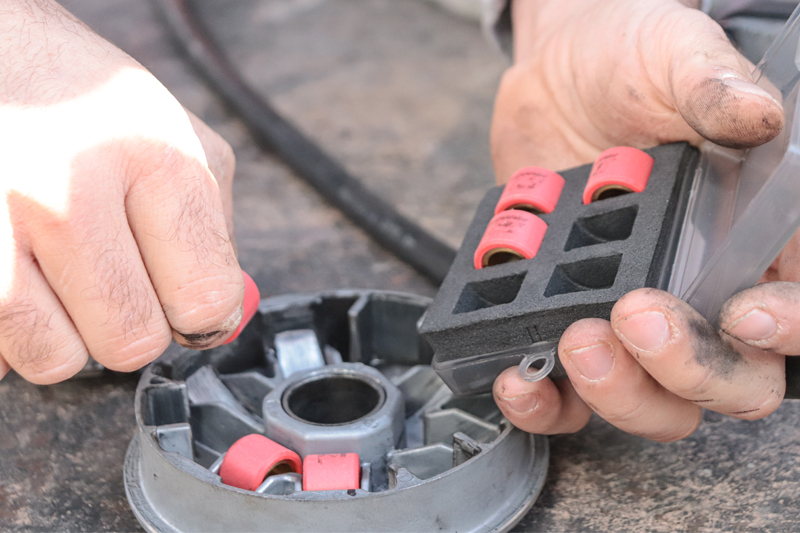
Image source: Phalexaviles /www.shutterstock.com/ru
In addition, rust starts appearing on the metal elements of the variator in the course of time which cuts down service lifetime of the components, and risk of seizure grows.
The greases that are used to maintain the devices require observing the replacement regulations. When lubrication lacks, the parts wear intensively what causes variator failure.
Repairing variators by using MODENGY coatings
MODENGY 1002 anti-friction solid-film coating based on molybdenum disulfide is applied onto the rollers, into the disks holes, and onto the other movable units of the motor machines’ variators.
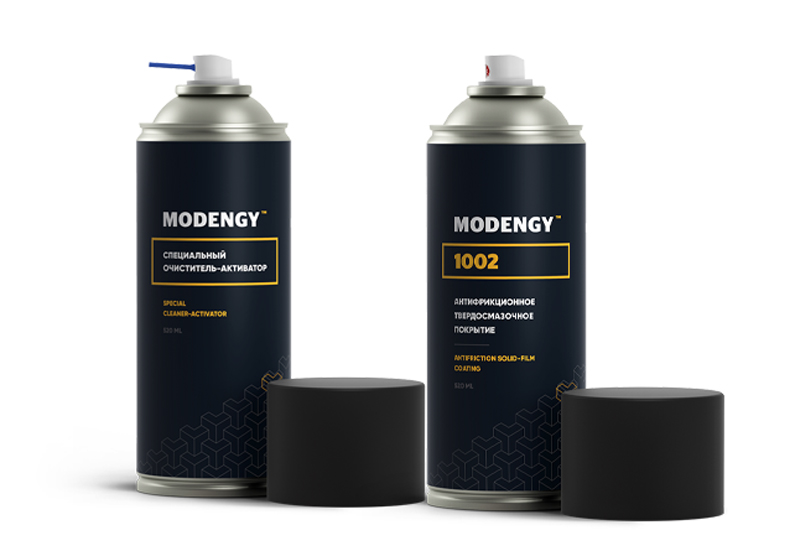
It provides long-term lubrication of the parts under conditions of grease products lack, and protection against corrosion for the metal elements.
Effects of the coating application:
- Variator’s power improvement
- Fuel consumption reduction
- Improvement of the mechanisms operational smoothness, prevention of jerks and stick-slip motion
How to apply MODENGY 1002
MODENGY 1002 coating is applied onto preliminary prepared surfaces by the method of spraying out of the aerosol can, and cures at room temperature.
The internal surfaces of the driving and driven pulleys disks need to be kept safe from getting solid lubricating materials onto them. High friction coefficient between them and the belt must be provided to prevent belt slippage.
Isolation of these surfaces is possible to implement by using masking tape or paper.
Prior applying the aerosol can with the product needs being shaken for at least 3 minutes after you hear tapping of the little balls inside it.
Spraying is performed from the 20 to 30 centimeters distance. The coating is applied in 2 layers with a break for drying in between.
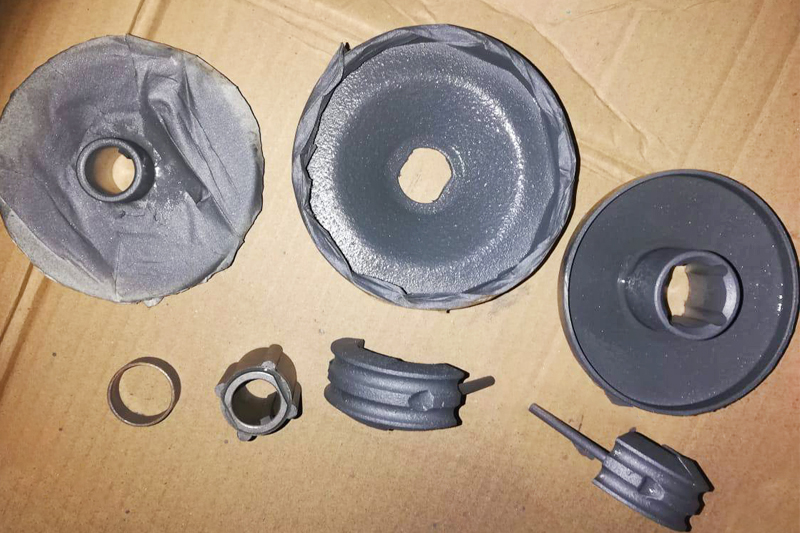
Fig. Variator's parts coated with MODENGY 1002
The final cure of the product is reached in at least 120 minutes at room temperature.
For more information about MODENGY coatings use at repairing variators contact the Modengy company.
Request information