







Principle of operation, and application fields of variators
A variator is a device to transmit torsion torque, and gear ratio changes for infinite rotation speed control.
V-belt variators with variable diameter pulleys are the most common ones. Such devices are used as automotive transmission, in the lathe and other machines, motor vehicles, conveyor lines, and other devices.
A variator consists of two pulleys each one, in its turn, has two conic disks. A closed circulated V-belt is stretched between these pulley disks.
As gear ratio changes (the belt is shifting onto outer radius of one pulley, and internal radius of the other one), speed changes. One disk of each pulley is fixed, the second one is changing its position due to centrifugal force, hydraulic pressure, or spring power.
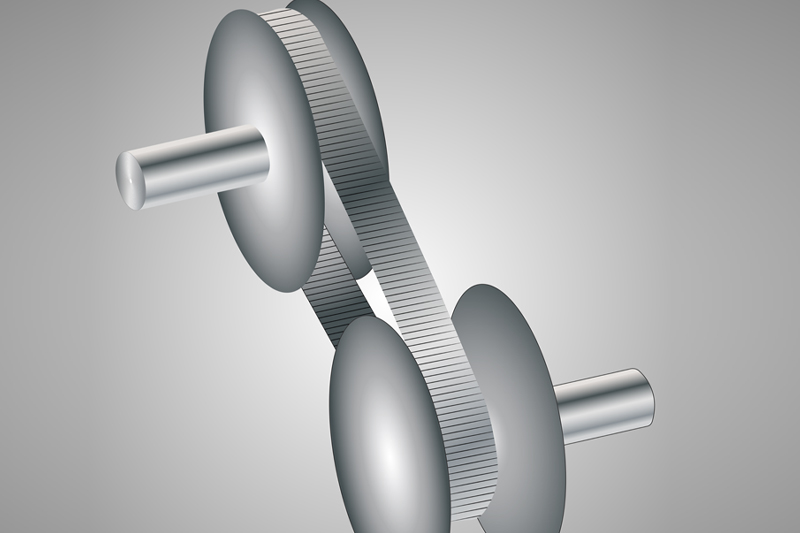
Fig. 1. Variator
The pulley disks come together/ dissociate synchronously. While they are moving relative to the shaft, strong friction arises that causes wear of the conjugated surfaces, that is axis and the part of the disk mated to it.
As a result of this, a gap forms between the parts, torsion torque transmission starts going by jerks, smoothness of going loses which becomes the cause of improper functioning of the variator, and its premature failure.
One of the most effective ways to extend service lifetime of the variator is using anti-friction solid-film coatings.
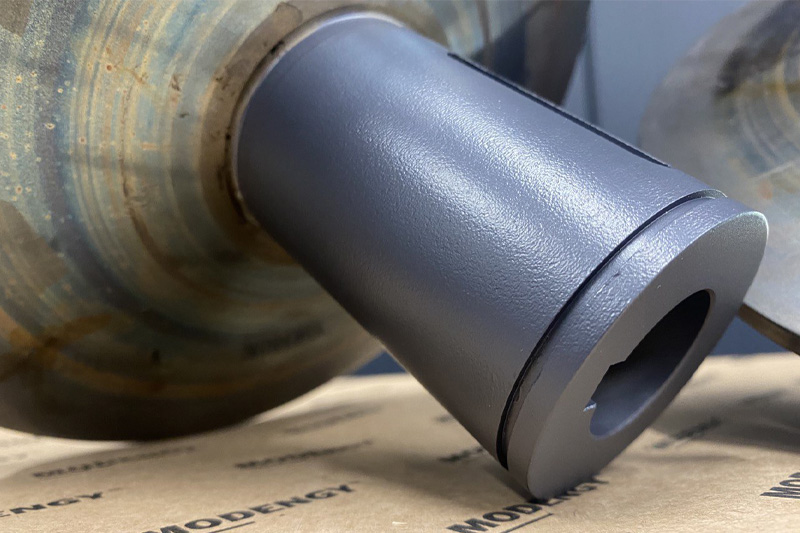
Fig. 2. Parts of variator treated with a MODENGY anti-friction coating
Advantages of using anti-friction coatings for variators
To provide long stable operating of the parts, MODENGY anti-friction solid-film coatings are used.
They create a steady layer of solid lubrication on the treated surfaces which:
- Extends service lifetime of the variator in general
- Makes adjusting disk position relative to the shaft easier
- Increases potential of the executive mechanisms
- Improves power efficiency (provides saving fuel or electrical energy depending on the application field of the variator)
- Prevents stick-slip motion, provides smooth moving of the elements without jerks and jamming
- Improves reliability of unit running
MODENGY coatings provide long-term lubrication of the parts, and need no refreshing for the entire service term of the variator.
Application examples of MODENGY coatings on variatiors
MODENGY 1002 coating is successfully used on the motor vehicles variators parts.
It is applied onto the rollers, and disks surfaces conjugated with the shaft (see Fig. 3). The image shows appearance of MODENGY 1002 coating on the scooter variator parts. This product was additionally applied on the external surfaces of the disks too for the purpose of corrosion protection.
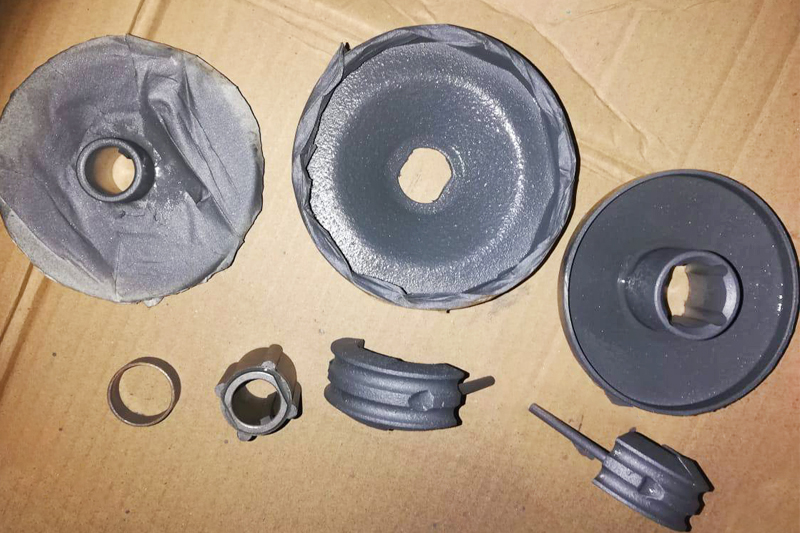
Fig. 3. Scooter variator parts treated with MODENGY 1002 anti-friction solid-film coating
On the parts of the drive variator of the plant on production package of corrugated cardboard, a complex of MODENGY products is used.
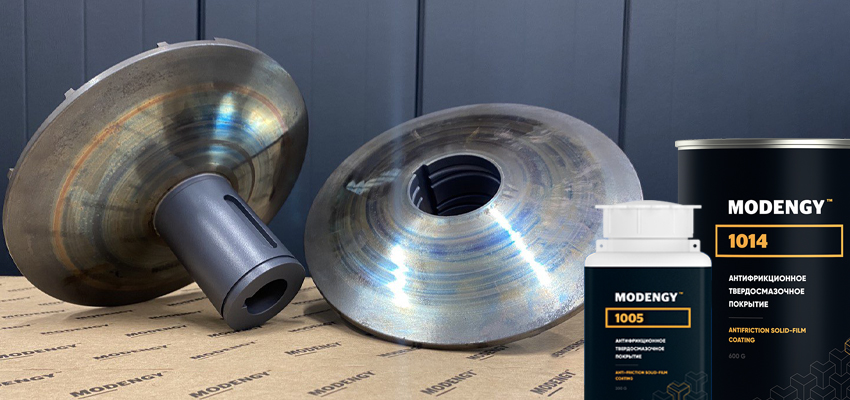
MODENGY 1014 coating based on polytetrafluoroethylene and molybdenum disulfide is applied onto the variator shaft neck while MODENGY 1005 based on molybdenum disulfide is done onto the mated surface of the disk.
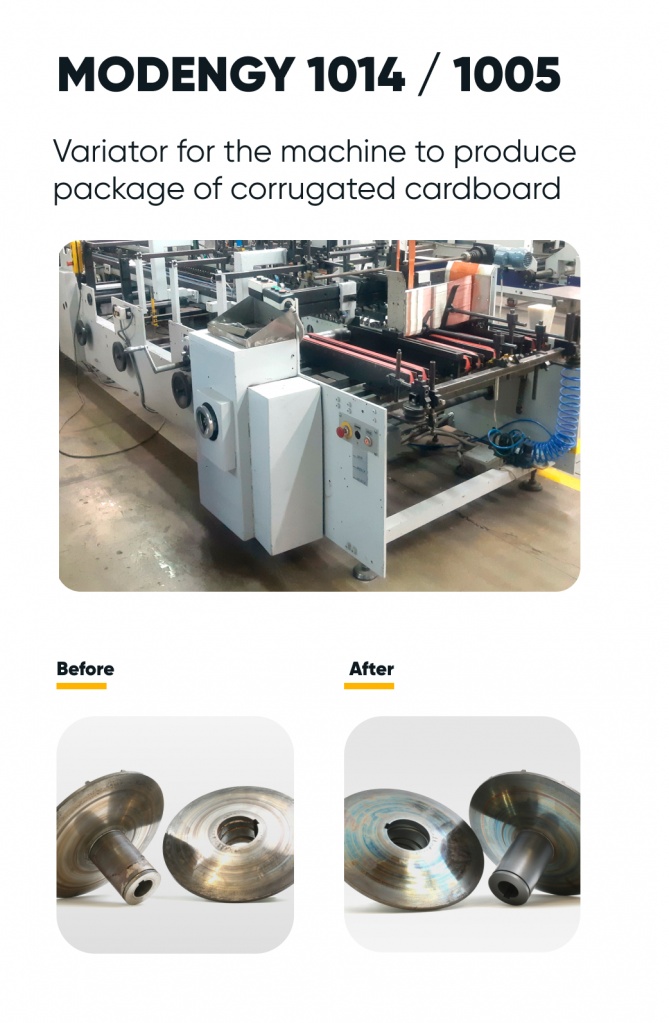
Fig. 4. The parts of the drive variator of the plant to produce package of corrugated cardboard treated with MODENGY 1005 and MODENGY 1014 coatings
No anti-friction material must be on the internal surfaces of the variator disks since high friction coefficient must be provided between them and the belt to prevent slipping.
The anti-friction solid-film coatings are applied by the method of spraying out. An aerosol can or a spraying gun (depending on the product) is used for this purpose.
Prior applying the coatings, it is necessary to protect the surfaces of the parts where the coating must not get by using masking tape, paper, or other available materials.
In case the coating gets onto the disks, the non-cured product can be removed with a solvent.
Polymerization mode also depends on the product. For example, MODENGY 1002 can dry at room temperature, and MODENGY 1005 and MODENGY 1014 need in aging at heating in a kiln.
Coatings selecting is done on the basis of the specific operational conditions of the variators. For more detailed information and consultation address the Modengy company, please.
Request information