







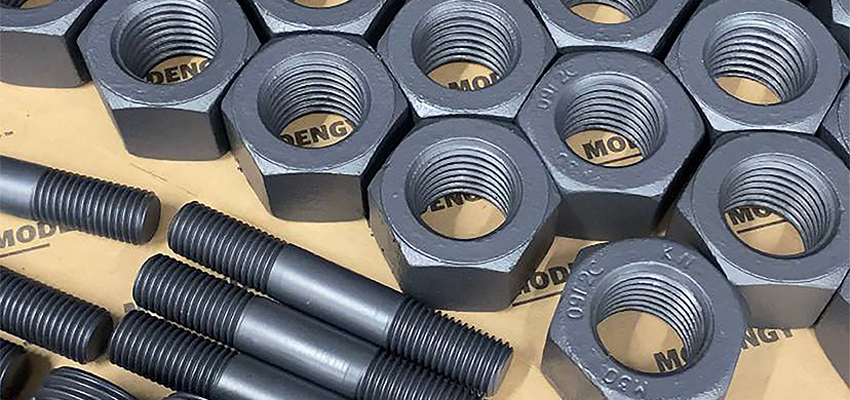
One of the tasks facing the oil-producing and oil-maintaining companies is to extend service lifetime of the equipment due to friction reduction and protection against chemically aggressive medium. This is relevant for a wide range of the items starting with threaded fasteners and closing with complicated intrawell equipment.
What is an AFSFC?
However, it is not always possible to solve such complicated tasks by using conventional grease-like lubricating materials in view of the special features of their application. Labour input required to apply them, necessity in greases renewal at every mounting and after long storage of the parts, hardening at negative temperatures, squeezing out of the contact zone at high loads, losing their properties being exposed to chemically aggressing media, and harmful environmental impact are among them.
Nevertheless, an alternative that has no the drawback pointed above has appeared at the market now. It is anti-friction solid-film coatings (AFSFCs) what is meant. These are the materials containing finely dispersed powders of solid lubricating substances distributed in mixture of resins and solvents. They are released in form of suspensions which after applying and polymerizing create a thin dry lubricating layer on the treated surfaces strongly cohered with the base.
The coatings based on molybdenum disulfide, a natural mineral with a clearly marked stratified structure, and with a possibility for their layers to slide easily along one another, have spread widely in oil-and-gas industry.
The coating containing highly dispersed particles of solid lubricants fills in the microroughnesses of the surfaces of the treated part, enlarges its area of support and load-carrying capacity.
A layer of the AFSFC has high compression resistance but low shear resistance. Due to this, friction coefficient is minimized, separation of the contacting surfaces and protection against damages are provided. Besides, some brands of the coatings effectively protect metal items against corrosion.
The main advantages of using the solid-film coatings are:
- Low friction coefficient, stable within a wide range of operational conditions – at high contact pressures and temperatures
- No evaporating, oxidizing, squeezing out of the point of applying at high loads. These coatings provide reliable operating of the mechanisms even after their long downtimes
- Long service lifetime, no need in renewal after every mounting/ dismantling of the unit
- High antiscoring, anticorrosive properties
- Dry texture causing no sticking-on abrasive particles
- Safety for environment
- Easy and practical way to apply
- Preventing asphalt-resin-paraffin deposits (ARPD) from forming
‘Lubrication-free’ technology in threaded connections of the pipes for hydrocarbons production
An efficient solution to provide easy and quick mounting, protecting pipe threaded connections against corrosion become the coatings with various solid-lubricating fillers and binders.
For the pin-pipe ends, the materials of ‘cold’ curing are used that are applied by one of the most convenient methods – by spraying out.
On the items made of stainless steel, to protect them against scuffing, to increase rate and quality of mounting, to make the following dismantling easier, MODENGY 1001 coating (see Table 1) based on molybdenum disulfide (MoS2) and graphite (C) intended for operating in dry friction mode, is used.
On the pin-pipe ends required additional corrosion protection, MODENGY 1002 coating (see Fig.1) based on MoS2 with organic binder is used.
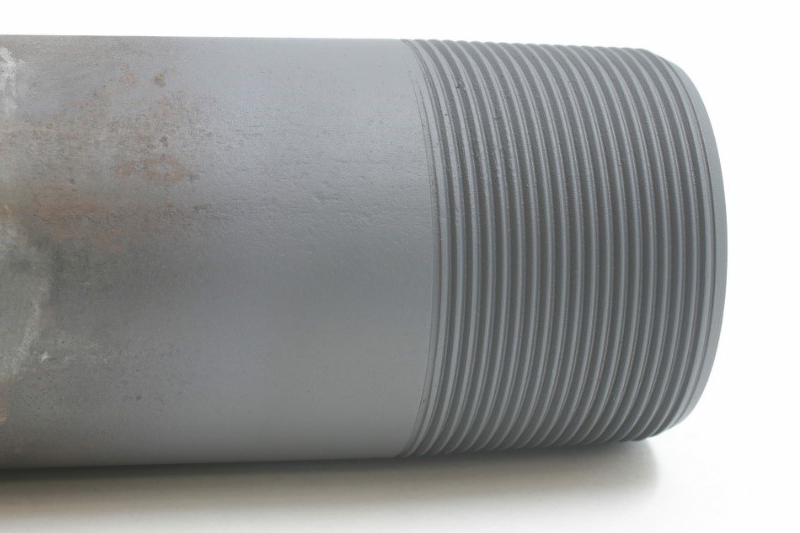
Figure 1. MODENGY 1002 solid-film coating on the pump-compressor pipe thread
This product enables to abandon using conservation greases. It can also fulfill function of a ‘sublubricating’ layer being used together with a grease or being an alternative to phosphating.
The molybdenum disulfide coating has revealed great results in the tests for screwing in threaded connection of a casing pipe and a couple at using together with a thread sealing lubricant. The AFSFC was applied as a ‘sublubricating’ layer.
There were 4 cycles of screwing/unscrewing held, three first ones were done with the effort of 1,500 N⋅m, the last one – up to reaching plastic deformation that was registered on the thrust faces at the pull force moment of 4,400 N⋅m, however, no critical wear of the coating on the thread was detected.
To protect the pipe threaded connections against corrosion, phosphating is often used. A conservation grease penetrates into phosphate film pores and holds there, which enables to provide protection for the thread. Due to high anticorrosive properties (for more than 160 hours according to the results of the accelerated tests in neutral salt mist according to ISO 9227 standard), MODENGY 1002 AFSFC is a great alternative for phosphating which is effective but very labor-intensive and not environmentally safe process.
MODENGY 1001 and MODENGY 1002 cold curing coatings can be applied both at the production sites and under field conditions, due to availability of various package types including aerosol cans.
On the couplings which can be put into a kiln by portions, MODENGY 1005 (see Table 1) ‘hot’ curing coating based on MoS2 as well as MODENGY 1014 based on PTFE (polytetrafluorethylene) in combination with MoS2 are applied. They are characterized by higher anticorrosive properties, load-carrying capacity, and wear resistance than the ‘cold’ curing coatings, however, application of them is limited by the specific features of their polymerization mode – at heating the parts up to +200 °С.
Single applying of such coatings provides protection for the threaded connections for many screwing/unscrewing cycles enabling to abandon completely using greases and liquid lubricating compounds, phosphating, and chemically thermal treating of the metals.
Basic features of the coatings for pipe threaded connections are presented in Table 1. MODENGY 1001 and MODENGY 1002 are applied onto pin-pipe ends, MODENGY 1005 and MODENGY 1014 are done onto the couplings.
Table 1
|
Number |
Solid lubricating components in composition |
Polymerization mode (exposure time, min./ temperature, °С) |
Corrosion protection (accelerated tests acc.to ISO 9227 standard, hour) |
Standard expense, g/m2 |
|---|---|---|---|---|
|
MODENGY 1001 |
MoS2, C |
15 / +23 |
- |
100 |
|
MODENGY 1002 |
MoS2 |
120 / +20 |
> 160 |
80 |
|
MODENGY 1005 |
MoS2 |
40 / +200 or 70 / +130 |
720 |
70 |
|
MODENGY 1014 |
PTFE, MoS2 |
40 / +200 |
> 672 |
55 |
Application of AFSFCs in the hydraulic fracturing (HF) equipment
The hydraulic fracturing equipment is operated under conditions of expose to chemically aggressive media, and thus it must work out in a reliable way even after long downtime period inside the well.
On the parts of the hydraulic couplings to carry out hydraulic fracturing, the anti-friction solid-film coating with molybdenum disulfide and polytetrafluorethylene having high anticorrosive properties, chemical resistance, wear resistance is used (see Fig.2).
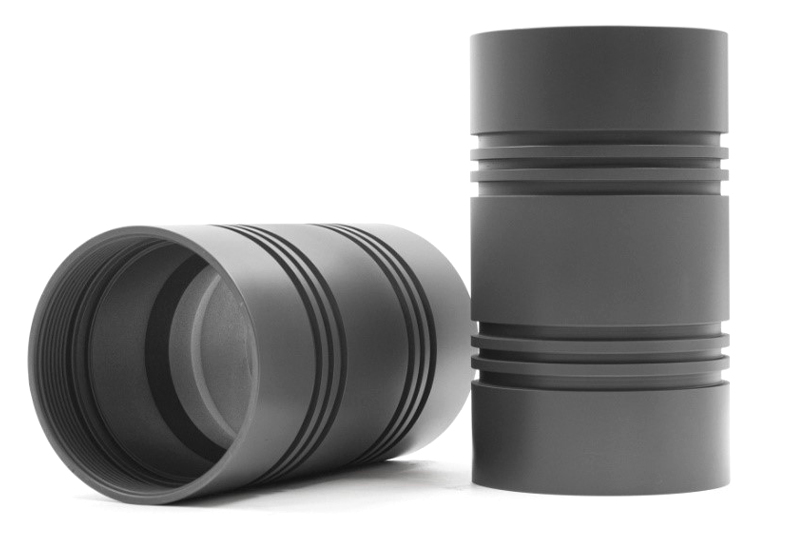
Figure 2. MODENGY 1014 AFSFC on the hydraulic fracturing equipment parts
It is needed to protect the item against chemical corrosion, wear while pumping the hydraulic fracturing fluids and ceramic sand through them, to reduce and stabilize shearing forces at opening/closing the equipment mechanisms.
Application of AFSFCs enables to use general purpose constructional materials at designing the mechanisms for hydraulic fracturing instead of expensive acid-resistant materials.
Review of the relevant solid lubrication applications in the oil-and-gas equipment
Beside the pointed equipment units, the AFSFCs help extend service lifetime of the ram-type blowout preventers, oil platforms fastening items, gas main line pressure sensor valves, slide bearings, face seals, rack-and-pinion gear of the axial type valves, springs, pipeline threaded connections, pipeline manifolds, etc. Let’s consider some of these applications.
Anti-friction solid-film coatings are used to extend service lifetime and improve reliability of ram-type blowout preventers operation.
They effectively reduce friction and wear of the trapezoidal thread of the ‘screw-pusher’ connection of the preventer's plates drive.
The system based on MODENGY 1005 molybdenum disulfide ‘hot’ curing coating is applied onto the preventer ram holders (see Fig.3) functioning in direct contact with the aggressive media. This solution provides record high protection against corrosion and aggressive media impact as well as improves smoothness of going, and guarantees reliable operation of the equipment when an emergency situation arises, even after a long downtime.
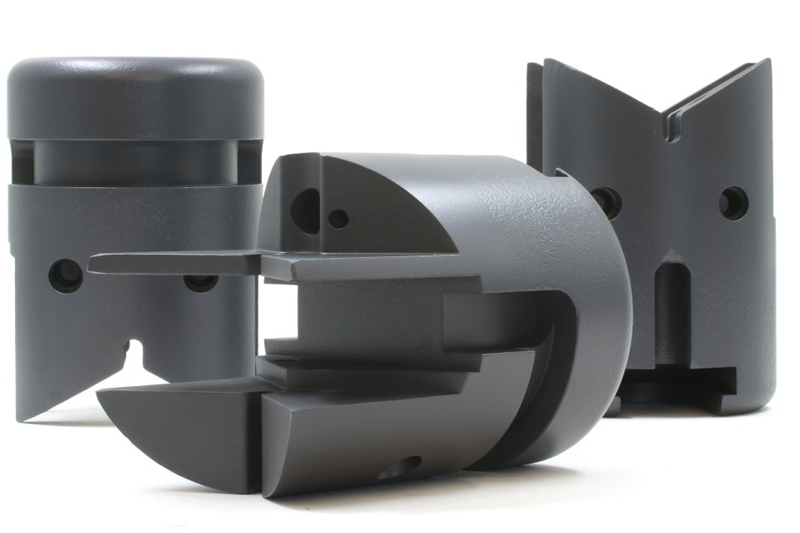
Figure 3. Preventor ram holders treaded with MODENGY 1005 AFSFC
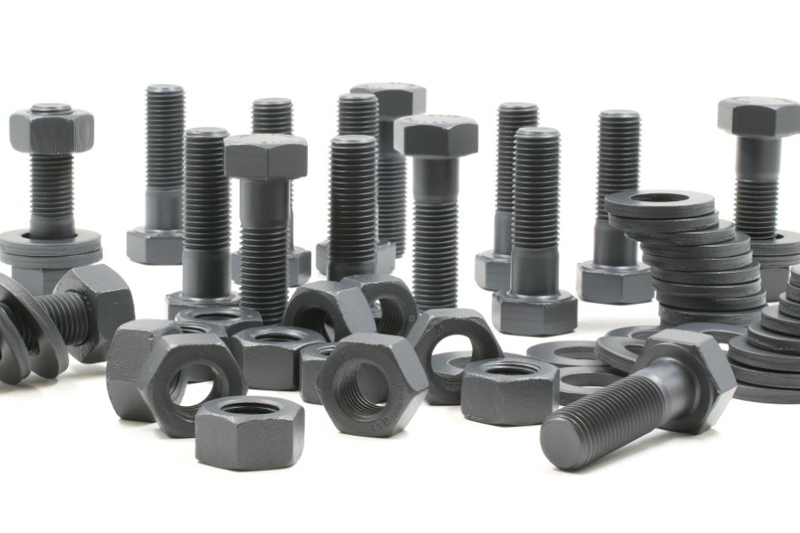
Use of MODENGY 1014 based on PTFE and MoS2 is one of the most effective solutions to protect fastening items of oil-and-gas industry equipment.
This product stabilizes friction, reduce probability of jamming, and scuffing forming on the thread turns, enables to assemble and disassemble the connections repeatedly providing high quality of the equipment.
One of the main functions of the coating on the threaded fastener for offshore oil platforms is to provide longterm corrosion protection in the aggressive sea climate, even at multiple mounting/dismantling.
This coating demonstrates excellent results as a part of the accelerated tests in the salt mist chamber according to ISO 9227 standard - more than 672 hours.
If there is a need in increasing the anticorrosive properties, a primer-layer is applied under the coating. Due to this, corrosion protection for more than 1,000 hour is achieved as a part of the same tests (see Fig. 4).
The AFSFCs provide reliable operating of the shut-and-control valves. They are applied onto the gate-valve stems, rack-and-gear drives to make components moving easier, to protect them against corrosion for a long while, to prevent scuffing and sticking.
So, use of the anti-friction solid-film coatings enables to significantly cut down time and effort for assembling and maintaining the oil-and-gas industry equipment units. These products have unique properties enabling to control friction effectively, to reduce wear, and to protect the parts against corrosion.
For more detailed information, address to our experts by clicking the button below.
Request information