







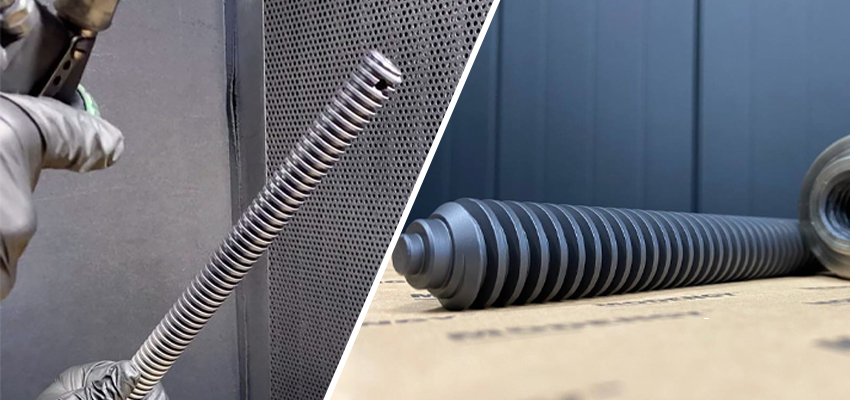
About MODENGY coatings and application of them in pipeline valves
Anti-friction solid-film coatings are thin polymer films filled with the particles of the solid lubricating substances. They provide lifetime lubrication and protection for the parts running under complex operational conditions where known conventional lubricating material are not effective.
Such coating have given a good account of themselves as excellent integrated solutions to extend service lifetime of the globe valves, latches, lead screws, valve parts, worm gears, rack gears, the flow part of the equipment to transfer aggressive media, and other pipeline fitting components.
We suggest you getting acquainted more closely the technology of applying MODENGY anti-friction solid-film coatings taking as an example treating the lead screws of the locking-and-regulating valves (see Fig.1).
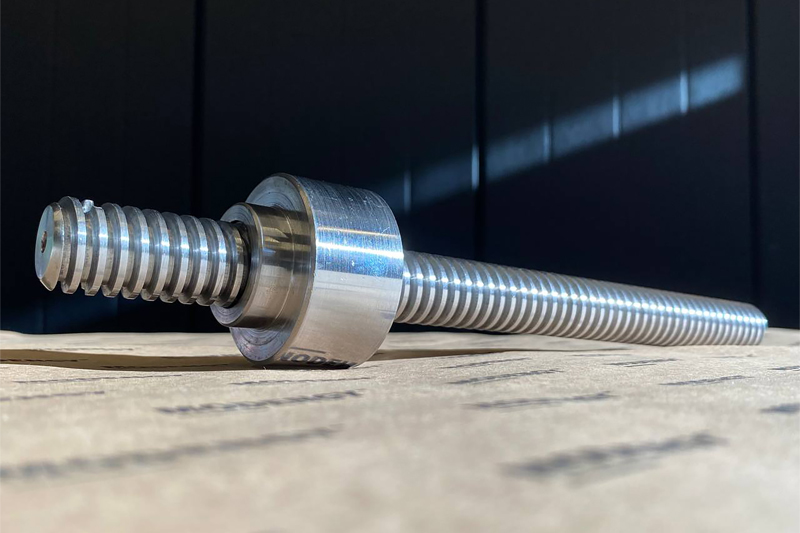
Figure 1 – Lead screw of a locking-and-regulating valves before applying MODENGY coating on it
Applying MODENGY coatings onto the parts can be fulfilled both at the Modengy Engineering Center in Bryansk town, and at the customer’s territory.
Applying MODENGY coating onto the lead screws of the locking-and-regulating valves
Before the Modengy’s engineers start working at an order, they need to get the data on operational conditions of the equipment and the friction unit.
The suitable solution is selected based on combination of the constructive materials the friction pair is made of, contact pressures, service temperatures, information on presence/ absence of other lubricating compounds, operating modes of the units, their environment conditions, required service term, etc. A special questionnaire for the purpose of selecting proper MODENGY coatings is getting filled in first.
One of the successful solutions used massively for the lead screws of the pipeline valves operating in dusty environment under heavy loads and under conditions of high humidity is MODENGY 1014 coating based on polytetrafluorethylene and molybdenum disulfide (see Fig.2).
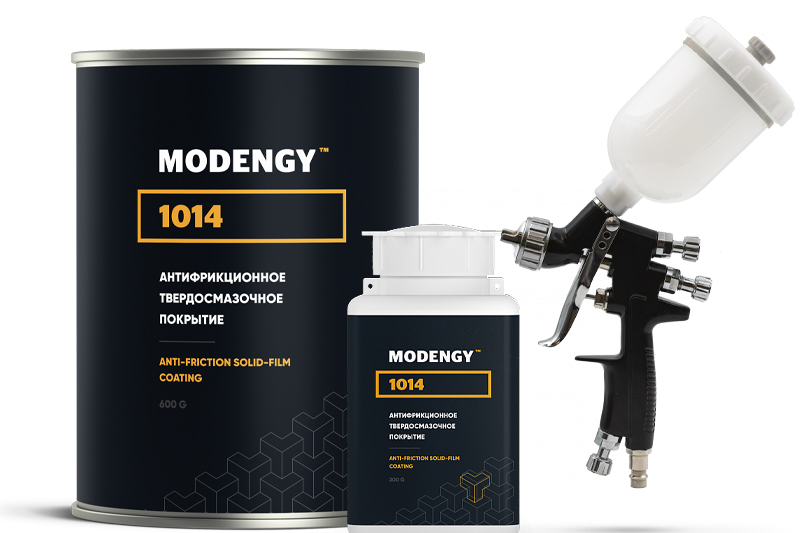
Figure 2 – MODENGY 1014 anti-friction solid-film coating
It provides long-term dry lubrication, prevents corrosion from forming, and protects against scuffing.
MODENGY 1014 performances:- Low friction coefficient
- Wide service temperature range: -75 to +255 °С
- Chemical resistance
- Working capacity in dusty environment due to dry texture
- Long service term (depending on the unit structure, it might serve as lubrication for the entire service lifetime of the equipment)
- High anticorrosive properties (more than 672 hours according to the results of the accelerated tests in salt mist acc. to ISO 9227 Standard)
After the proper coating has been selected, next step is to apply it. The basic engineering stages of the process are preliminary analysis and preparation of the parts surfaces, applying the product by various painting methods (for the valves lead screws it is spraying), polymerization in a kiln (or curing at room temperature without heating, it depends on a certain coating), and quality control of the obtained layer.
Surface analysis and preparation
Surface preparation affects considerably operating properties of the coating. Prior applying the product, the parts must be dry and clean, meet the relevant requirements towards surface quality in terms of microgeometry (optimal surface roughness Ra (µm) = 0.4 to 1.2).
Part cleaning from carbon deposits, other lubricating materials, contaminations, oxide films is done by available chemical and mechanical methods.
Minimal surface preparation required is treating the parts with MODENGY Special Cleaner-Activator.
In order to improve adhesion, provide optimal roughness, remove contaminations firmly bonded to the surface including oxide films, microsandblasting with sand particles of 40 to 60 µm fraction size is held (see Fig.3).
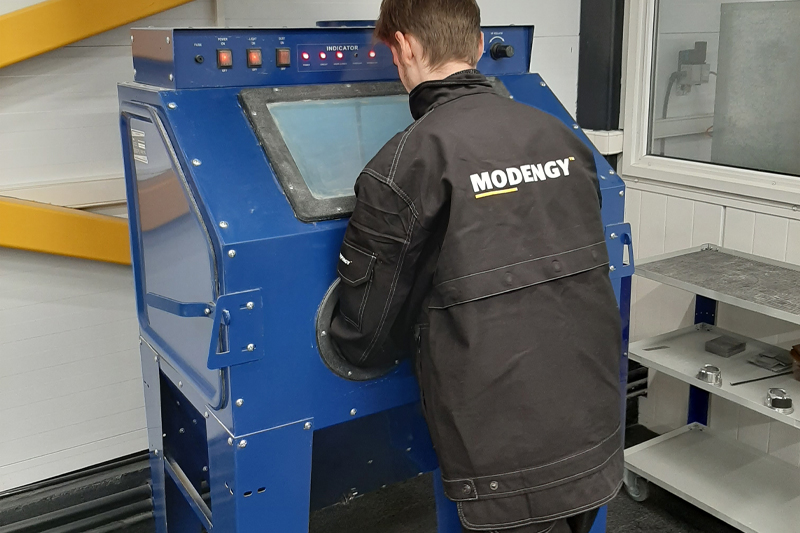
Figure 3 – Microsandblasting the parts at the Modengy Engineering Center
Also, phosphating, etching, ignition, and other surface preparation methods that are selected depending on operational conditions and state of the parts prior applying the coating can be used.
Applying MODENGY 1014 anti-friction coating by the method of spraying
The coatings are supplied in a form of suspension including binding substances, finely dispersed powders of solid lubricating materials, solvents, and functional additives.
The most common method of applying MODENGY anti-friction solid-film coatings is spraying with
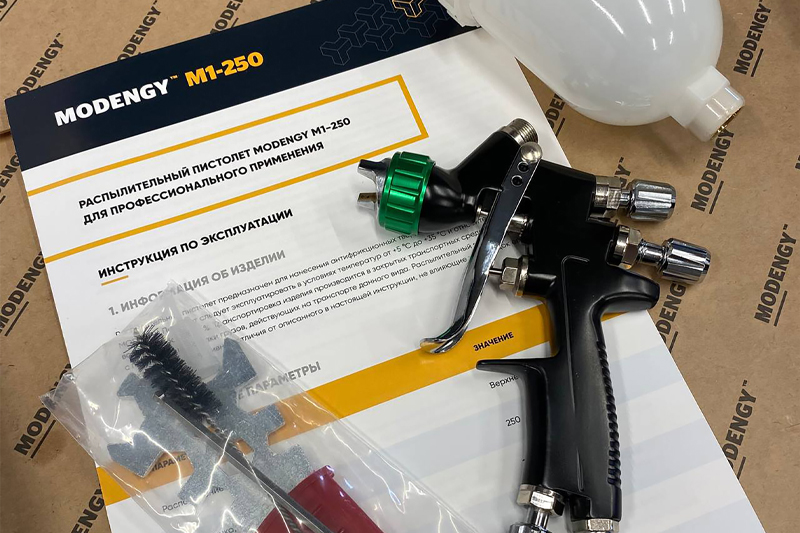
Figure 4 – MODENGY M1-250 spraying gun
MODENGY M1-250 spraying gun for professional application has the screws to adjust suspension feed and torch angle, due to what it is possible to control the process of applying, to create the most convenient spraying mode to obtain the layer of required thickness.
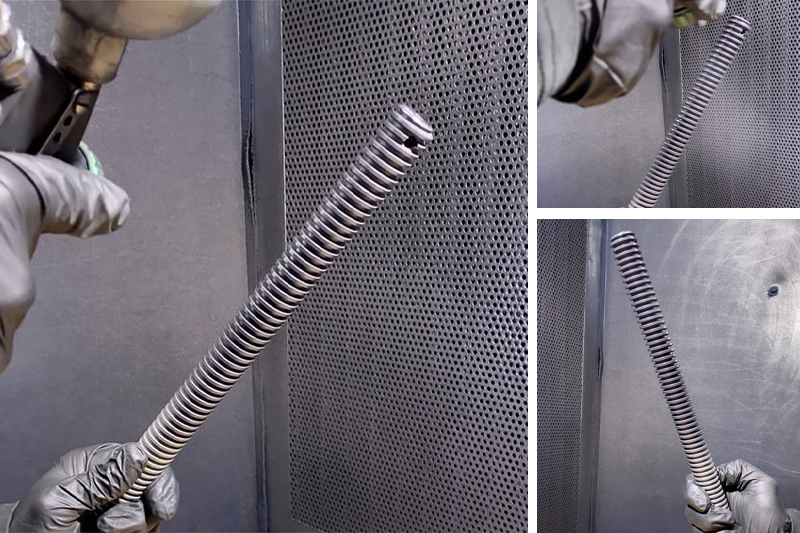
Figure 5 – Applying the coating onto a lead screw
The coating should be applied from a distance of 20 to 25 centimeters from the part surface (see Fig.5), in several layers with in-between drying of each layer for at least 10 minutes at room temperature.
Coating curing
Since MODENGY 1014 is a hot curing coating, its polymerization is held in a kiln during 40 minutes from the moment the parts got heated up to +200 °С. At heating and exposing inside the kiln, a polymer frame providing operability of the coating is forming.
Quality Control
In order to make sure that the lead screws treated with the coating are ready to be operated, quality control on the most important parameters such as thickness, polymerization fullness, adhesion degree, appearance is obligatory carried out (see Fig.6).
The cured coating must be even, without streaks, bubbles, or other defects.
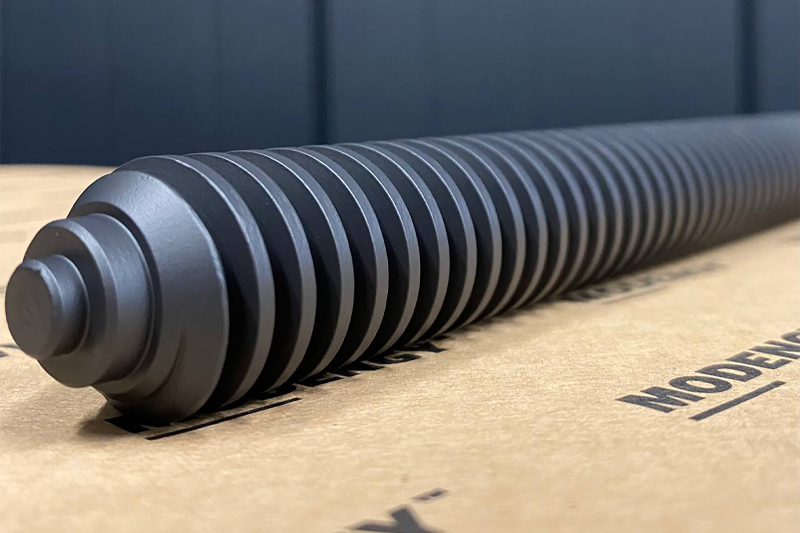
Figure 6 – Lead screw treated with MODENGY 1014 coating
The coating thickness is measured with a special instrument: magnetic thickness gage (for magnetic basis), or eddy-current thickness gauge (for non-magnetic basis). Optimal thickness of MODENGY coating is of 20 micrometers.
Polymerization fullness is assessed by using a special solvent. Fully cured MODENGY 1014 coating cannot be wiped off with special MODENGY 1013 solvent. If polymerization has not completed yet, then at wiping with a solvent-soaked rag the coating will remove till the very metal surface.
In order to reduce risk of incomplete polymerization, it is recommended to prolong the regulated exposure time in a kiln by 20 to 30 %.
Adhesion check by using the adhesive tear-off method enables to detect gross violations at preparing the surface. If the particles of the coating stick to the adhesive tape, the product is peeling off the base (metal), it means adhesion degree is not enough, and it is necessary to repeat the process of surface preparing, and to spray the suspension again.
In order to obtain professional skills on application of these coatings, the specialists of the enterprises, that regularly use MODENGY products, undergo training in Bryansk, and after that arrange the whole cycle of applying the coatings at their enterprise’s territory.
If you want to extend service lifetime of your equipment with the functional coatings, contact the Modengy company.
Request information