







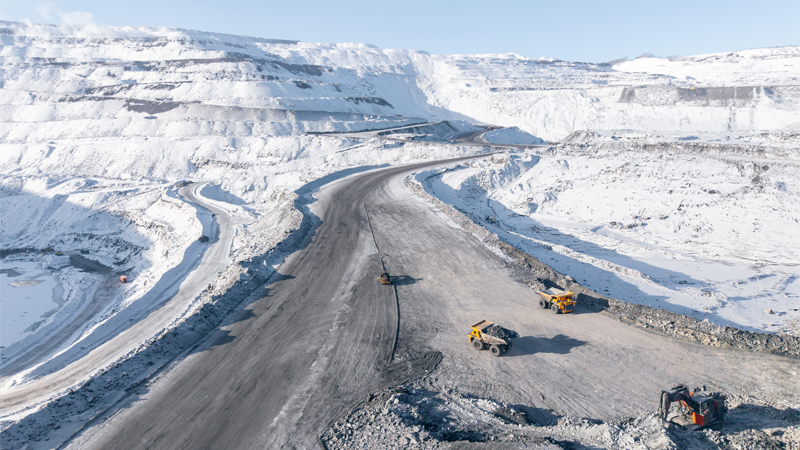
Requirements towards lubricating materials in subzero temperatures zone
Operational reliability and durability of machines and mechanisms under conditions of low and subzero temperatures depends directly on stability of physicochemical properties of the lubricating materials that are used.
The task of designing and selecting lubricating materials for subzero temperatures in connection with the works promising for mining that are actively holding in the Arctic zone and the Far North regions is especially relevant now.
Extreme climatic conditions, namely low temperatures (down to -70 °C in winter), annual temperature difference, increased air humidity in the marine zone hinder the development of these regions.
As temperature is lowering, changing of viscosity, the key rheological parameter of a lubricating material, is observed. This process causes increase of starting torque, appearance of conditions for boundary friction (oil starvation) at the starting moment, and as a result, to intensive wear of the machinery conjugate surfaces. Critical degradation of lubricating properties because of crystallization of the moisture contained in lubricants might entail failure of a unit, or the entire aggregate.
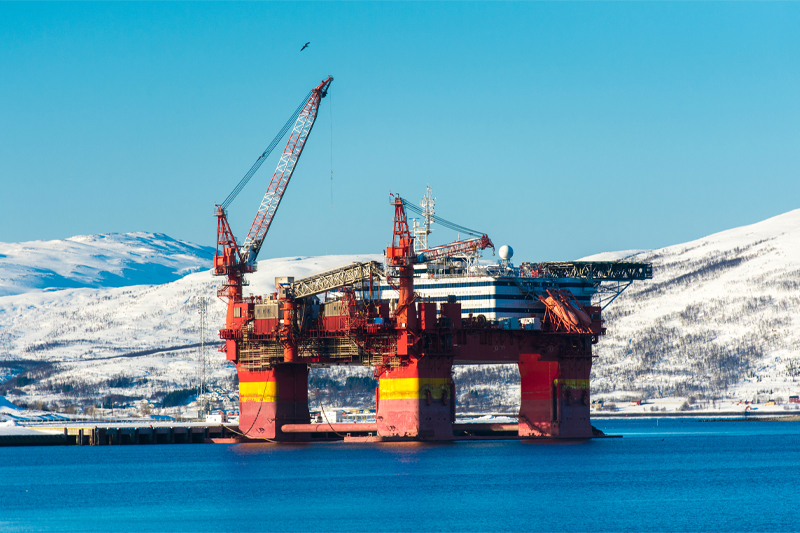
In coastal areas, due to high humidity, grease lubricants are subject to water invasion with forming an emulsion in connection with condensation processes, absorption and release of moisture out of materials composition (adsorption and desorption processes); besides, moisture also lowers efficiency of the additives used in the lubricants composition.
Under these conditions, a lubricant stops being just a consumable material, and transforms into a crucial element of the structure which operability, safety, and cost effectiveness of industrial and transport operations directly depend on.
Extending their durability lies, to a large degree, in using frost resistant lubricating materials retaining their properties both under subzero temperatures, and temperature drops, and not requiring frequent refresh.
Exactly such materials are MODENGY anti-friction solid-film coatings operating even at cryogenic temperatures. Frost resistance is far from the only advantage of the anti-friction coatings over conventional lubricating compounds.
MODENGY anti-friction coatings mean stable properties under extreme conditions
MODENGY anti-friction solid-film coatings are compounds based on compositions of solid lubricating materials evenly distributed in polymer binders together with functional additives.
These materials are applied at the stage of parts manufacturing. The suspension is sprayed out onto the prepared surface by a thin uniform layer followed by placing the treated item into a kiln to polymerize the coating.
The MODENGY coatings range also includes a product line of the ‘cold’ cure materials that require no exposure to high temperatures.
A ready to use coating is a thin dry 20 µm thick film firmly bonded to the part surface. The lubricating compound is integrated into a friction unit becoming an integral part of it, and commonly requires no renewal (a lifetime lubrication).
Properties and advantages of MODENGY coatings:
- Wide service temperature range (-210 °С to +730 °С)
- Anticorrosive properties (barrier protection mechanism)
- High operating efficiency in open friction units of machinery: its dry texture does not stimulate sticking-on of dust and abrasive
- Low layer thickness that does not virtually affects the parts size
- Chemical resistance
Application of MODENGY anti-friction solid-film coatings significantly expands operational capabilities of the machinery at extremely low temperatures.
Properties of conventional lubricating materials depend on keeping liquid or grease-like characteristics to create a protective lubricating film between the interacting surfaces. At very low temperatures, conventional oils and lubricants thicken or freeze losing their functionality.
The solid-film coatings, on the contrary, have no liquid phase after polymerization, and keep their structure and properties at both cryogenic and extremely high temperatures (-210 °С to +730 °С), are resistant to temperature drops.
Performance at cryogenic temperatures has been confirmed by tests and operating experience on shut-off and control valve components.
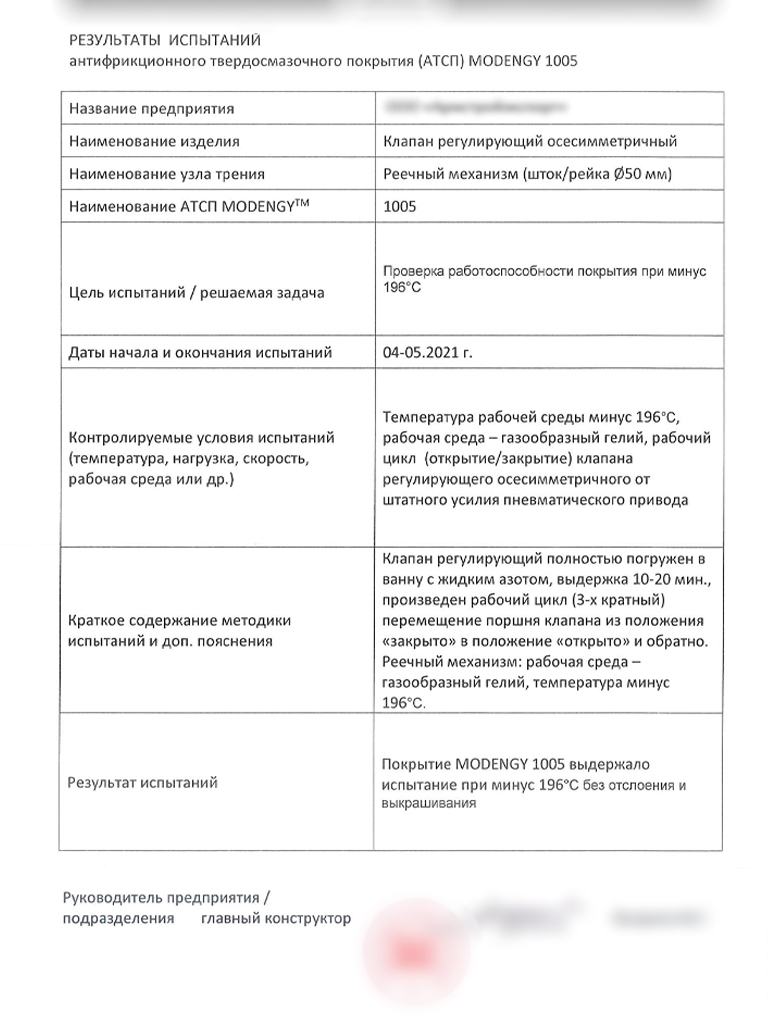
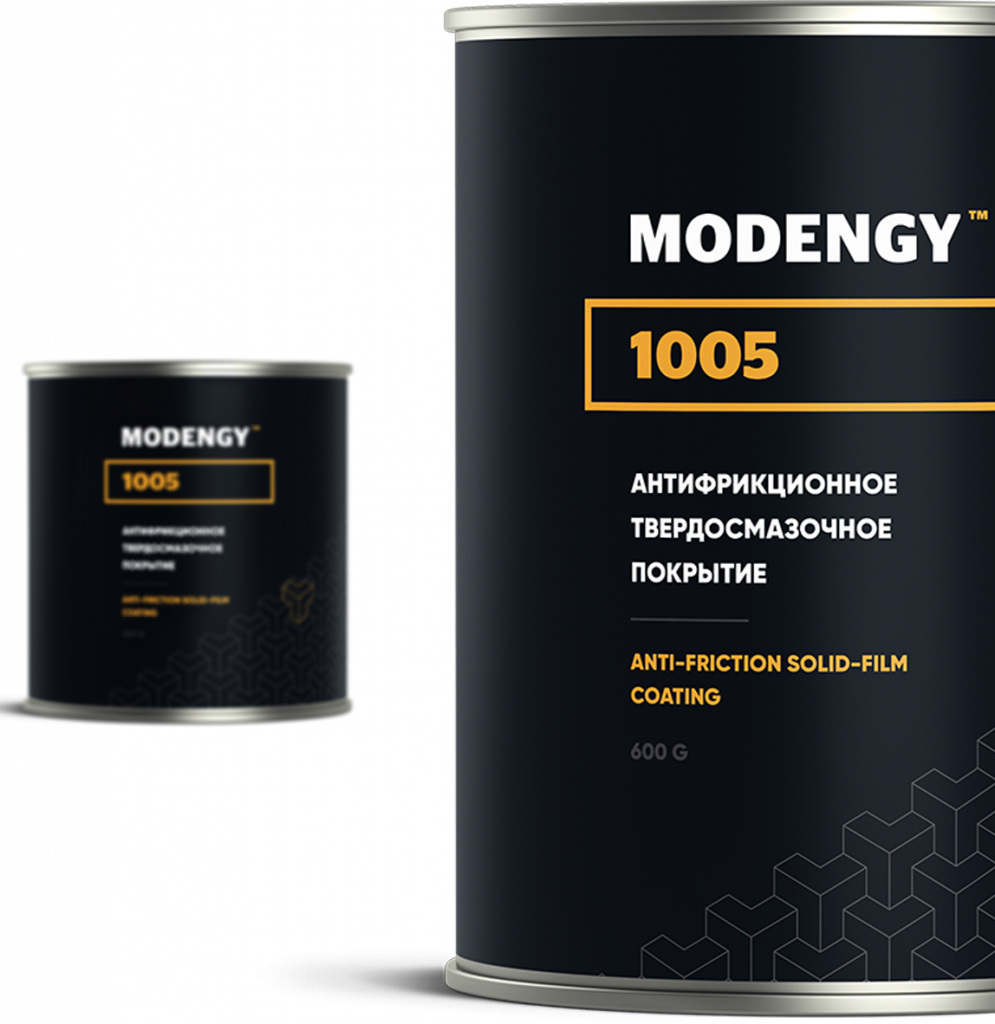
The rack and pinion mechanism with an axial valve, the parts of which are coated with an anti-friction solid lubricant coating MODENGY 1005 (to ensure easy sliding under high loads, reduce friction losses and protect against corrosion), is successfully operated in a helium gas environment at a temperature of -196 °C.
MODENGY coatings for rack gears
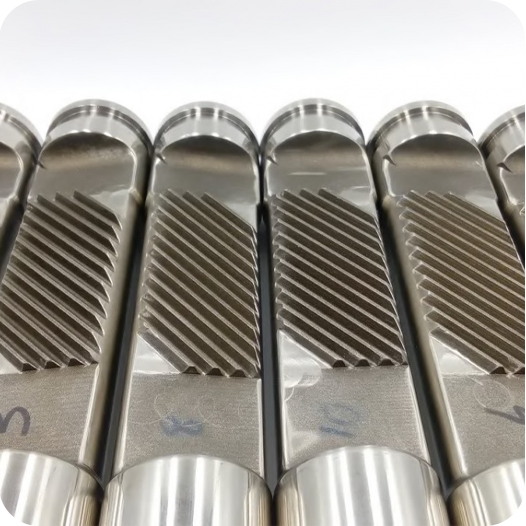
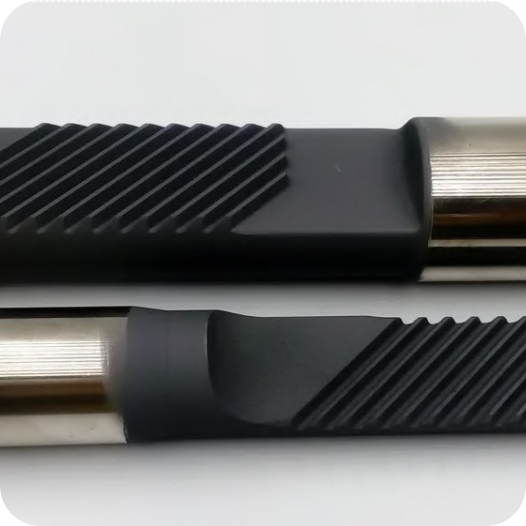
- Easy sliding under high loads
- Reducing friction losses
- Corrosion protection
- Wide range of operating temperatures: -200 … +255 °C
- Long service life
- High load-carrying ability
The coatings provide physical barrier between metal surfaces preventing scoring and wearing even at absence of a liquid lubricating material.
They form a long-lasting layer that is not washed out, nor evaporates, and often serves as a lifetime lubrication without need in refreshing. This reduces the need for maintenance, improves reliability, and extends maintenance intervals what is especially critical for faraway Arctic bases and infrastructures.
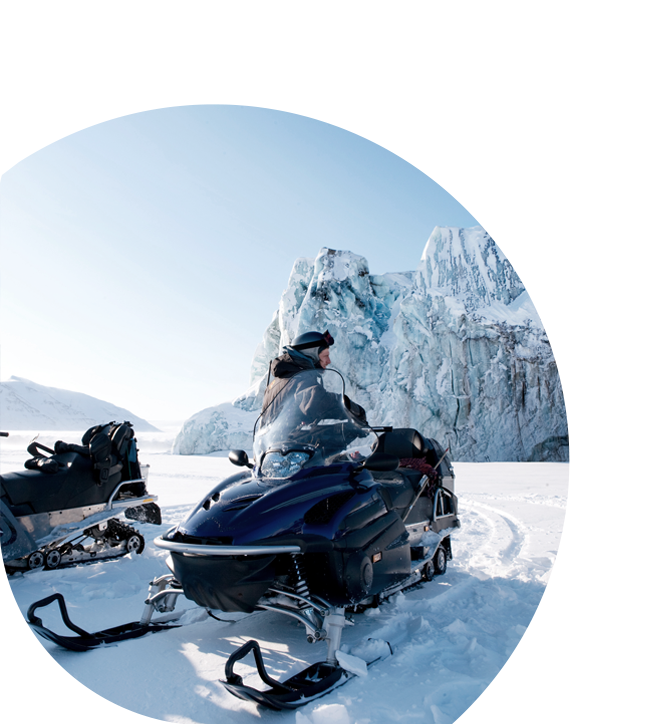
The anti-friction solid-film coatings are a high-tech addition or an alternative to conventional liquid lubricants and greases under Arctic conditions. They significantly improve reliability of the equipment, reduce wear and decrease risk of failures related to deterioration of the lubricating materials properties at extremely low temperatures.
Application of them is an innovative solution meeting the strictest requirements of operating in the severe climate of the Arctic and the Far North.
The Modengy company acts as an expert at designing the transport for the Arctic development program by enabling to create reliable trouble-free units of the modern machinery. All-terrain vehicles, drilling platforms, and specialized machinery operating in the Arctic get additional protection due to reducing failures probability caused by lubricant ‘freezing’.
For more details and professional selecting the anti-friction solid-film coatings for certain operational conditions, please, contact the Modengy company.
You can

Purchase the coatings and then apply them by yourselves. We will provide you with the detailed instruction

use our service on coating applying
at our Engineering Center
for self-applying