







Introduce
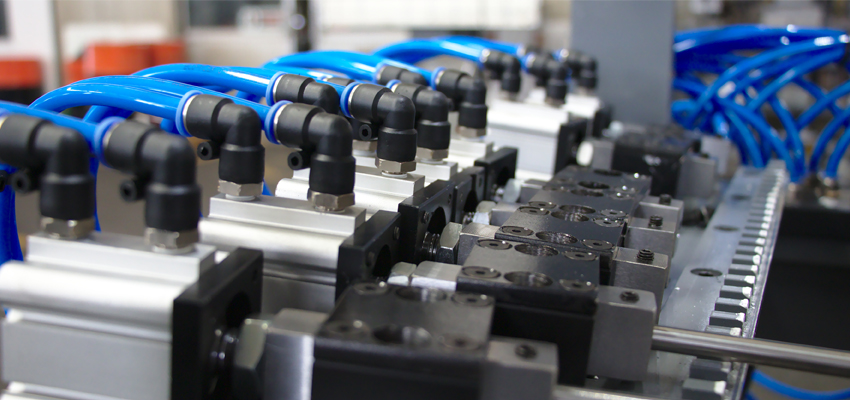
Pneumatic drives are widely used today to solve the tasks of mechanization and automatization of the various technological processes.
Use of such devices on pipelines enables to optimize their design for the purpose of reducing the prime cost, and improving such operating characteristics as tightness, service lifetime, friction loss, efficiency factor, resistance to exposure to environmental factors.
The specialty constructive materials that provide connection tightness, reduce and stabilize friction, as well as extend mechanism service lifetime are selected for the pneumatic drive interacting friction pairs.
The pneumatic cylinder cartridge, as a rule, is made of steel, or stainless or aluminum alloys. To reduce roughness of its inner surface the methods of finishing mechanical metalworking is used, additional functional coatings are applied, various greases are used.
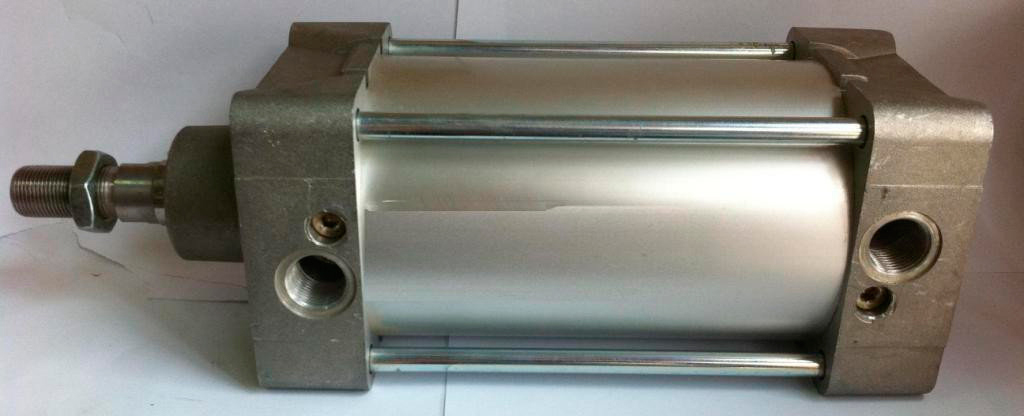
Before these or those materials, and processing methods are used, features of the friction processes, and pair wear are taking into account without fail, otherwise it won’t work out to achieve friction coefficient stabilization, and this will cause stick-slip motion of the mating elements, elastomer seals buildup onto them, and total reduction of the drive efficiency factor.
The relevant task at pneumatic system maintenance remains search for and application of such technologies that enable to provide the whole set of the required equipment operating properties, and do so with as less expenses as possible.
Functions and advantages of the Anti-Friction Solid-Film Coatings
The Anti-Friction Solid-Film Coatings (ASCs) can perform simultaneously two functions: lubricating and protective ones. These materials reduce friction and wear of the parts, as well as preserve them from the negative impact of corrosively active and chemically aggressive media.
The dry lubrication technology, according to which the Anti-Friction Solid-Film Coatings are made, enables them to form a thin composite film (up to 30 µm) on the metal surfaces which is firmly bonded to the base. From the chemical perspective, the coating layer is a polymer matrix whose cells are filled in with very fine particles of the solid lubricating material.
 The Modeling & Engineering
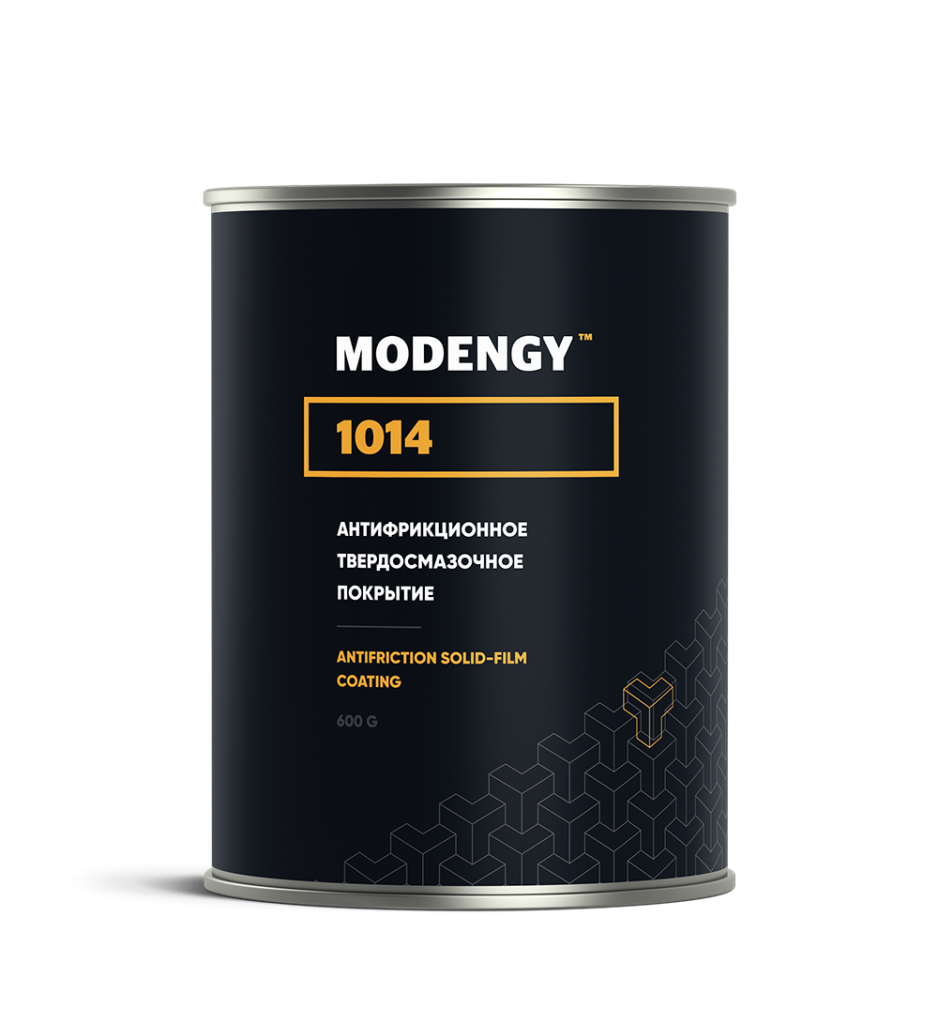
MODENGY 1014 Anti-Friction Solid-Film Coating is intended to be used on the pneumatic systems cylinders.
When applied onto the surface, it demonstrates a smooth texture (see Fig.1) and specific grey colour because of adding polytetrafluorethylene (PTFE) and molybdenum disulfide to its composition. The same components give the coating enhanced anti-corrosive and antiscuff properties.
According to the accelerated tests in salt mist (see Table 1), MODENGY 1014 corrosion protection level reaches 672 hours. If any additional surface preparation are taken (phosphating, for instance), this factor can be even higher.
The coating fulfills sealing and anti-friction functions inside the pneumatic cylinders, and protective and decorative ones from the outside.
Unlike the grease-like lubricating materials, Anti-Friction Solid-Film Coatings are not squeezed out of the contact zone being exposed to the loads and the working medium pressure. The separating layer that it forms doesn’t depend on exterior factors. All this enables to abandon the conventional greases in favour of the coatings.
MODENGY 1014 is applied by using painting method by spraying out. The treated parts keep in kiln for a while to let the coating cure.
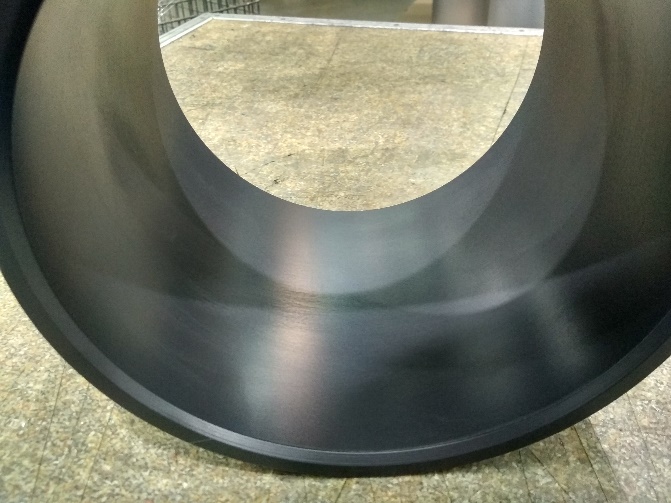
Fig. 1. MODENGY 1014 coating appearance on the inner part of the pneumatic cylinder cartridge
Table 1. Anti-Friction Solid-Film Coating typical features
| MODENGY coating | Anti-friction component | Colour | Service temperature range | Load carrying capacity (SRV test) | Corrosion protection (test in salt mist) | Drying temperature and time |
|---|---|---|---|---|---|---|
|
Modengy 1014 |
PTFE, molybdenum disulfide |
Gray |
-75... +255 °С |
2700 MPa |
≥ 672 hours
|
+200 °С, 40 min.
|
Assessment of MODENGY 1014 coating chemical resistance
The chemical resistance and protective properties of the coating were tested during the complex tests of the pneumatic systems elements made of anodized aluminum alloy (see Fig.2).
The tests were held in accordance with GOST 9.403-80 by using Methods A and B one after another. The typical conditions were used: tightly closed container, atmosphere: hydrochloric acid 25% solution, temperature: +20 (± 2) °С.
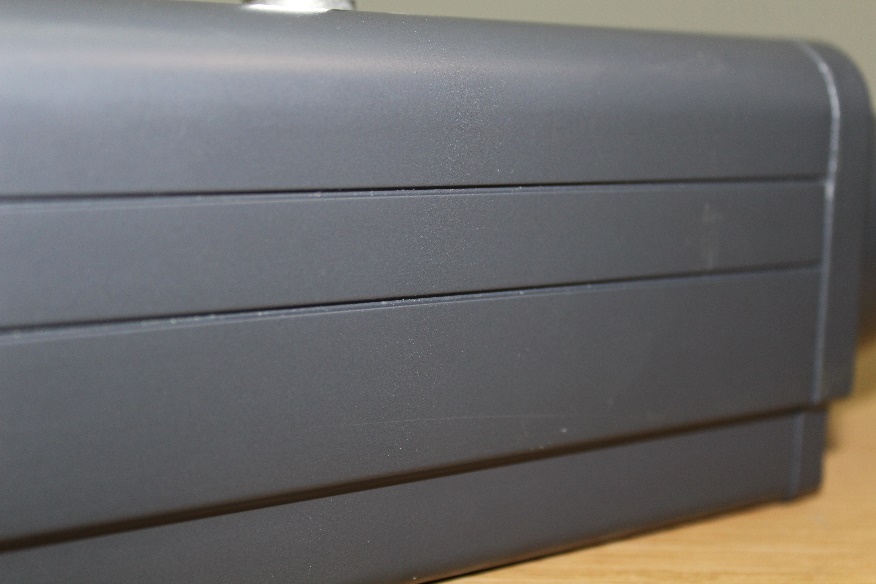
Fig. 2. MODENGY 1014 coating appearance as applied on the parts made of aluminum alloy
According to Method A, a container was filled in with 250ml of hydrochloric acid, and a treated part was put into it in such a way that its flat surface touches the liquid. Then the container was closed tightly with a lid and kept like this at room temperature for 50 hours doing regular assess of the item for any damages.
According to Method B, a tampon soaked in acid solution was placed onto the part surface in at least 20mm away from its edge, closed it with a special cap and fixed its position so that the sides didn’t touch the tampon (see Fig.3). The tests were held during 7 days at required temperature. When the procedure was over, the tampon was removed, and the state of the entire coating was compared with the state of the area which had been exposed to the tampon soaked with acid. Assessment was held in a visual way and with a magnifying glass (according to GOST 9.407-2015), and simultaneously, the coating adhesion was being checked according to ISO 2409:2013.
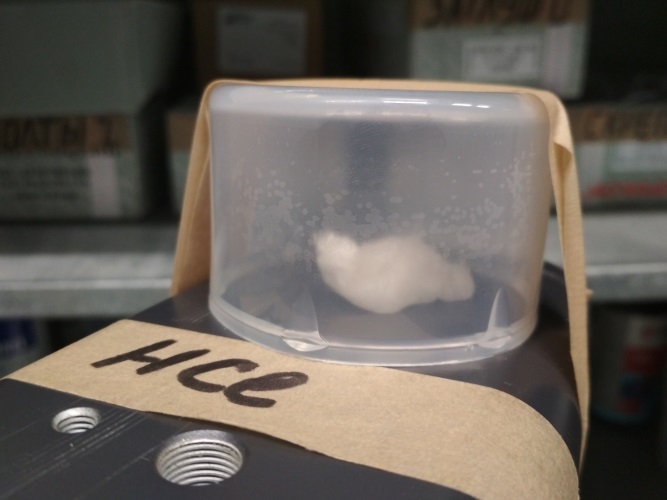
Fig. 3. The test on chemical resistance according to GOST 9.403-80 by Method B
When the due period passed after the tests by both methods, no colour changing, cracking, peeling off, swelling, nor any other coating defects were found out.
The test on coating adhesion was held by the lattice cuts method. The results were assessed by the 1 to 3 scores scale which correspond to ‘passed/failed test’ measures. The results of these tests are presented in Table 2.
Table 2 The test on adhesion results before and after the test by Method B
| The test method | Assessment before the test | Assessment after the test |
| The test on adhesion by the lattice cuts method according to ISO 2409:2013 |
0 points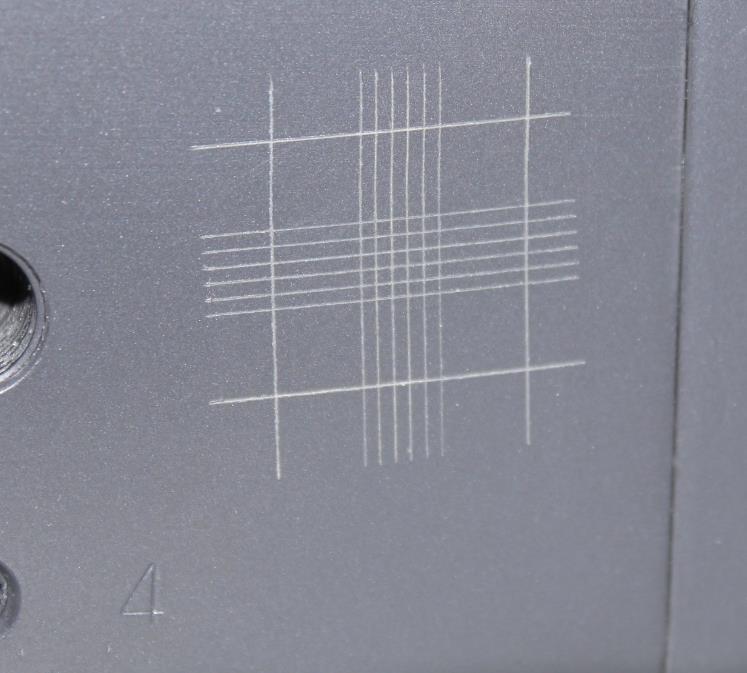
|
1 points 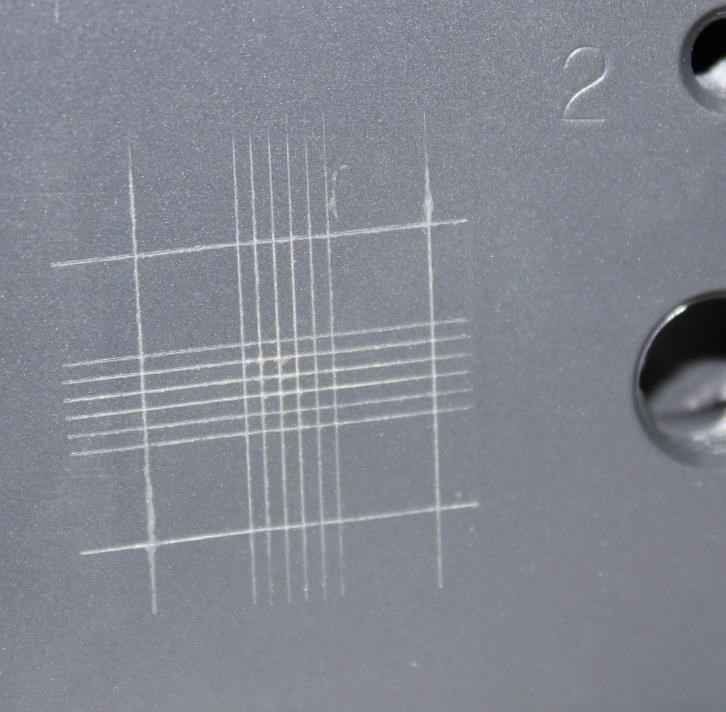 |
As a result of the test on chemical resistance, MODENGY 1014 coating has demonstrated high protective properties with insignificant adhesion reduction. The decorative layer formed by it on the part surfaces kept its smoothness and aesthetic appearance even after being kept in the hydrochloric acid for a long while.
Application results of MODENGY 1014 coating
MODENGY 1014 Anti-Friction Solid-Film Coating provides workability of the pneumatic drive without additional lubrication. Such solution is optimal under conditions of increased dustiness, for instance.
Joint use of the coating and the properly selected grease enables to achieve friction reduction by 3 to 4 times, as well as to extend service lifetime of the equipment.
One of the relevant pneumatic drive issues is sticking of the rubber sealing elements to the metal parts. As a result of this unwanted special feature, more forces have to be spent to start moving the moving parts, and at the same moment, the seals can get damaged and lose their seal properties.
The anti-friction coating creates a separating layer on the surfaces which prevents the rubber from direct adhesive interaction with the metal and makes the drive start off easier.
Use of MODENGY 1014 on pneumatic cylinders enables to optimize their design, and to gain a number of advantages in comparison with using conventional lubricants such as:
- High level of protection against aggressive exterior exposures
- Workability under dusty conditions
- Providing smooth drive motion due to content of the solid lubricating components capable to reduce friction effectively
- Increase of the pneumatic cylinder efficiency factor and service lifetime
- Easy applying technology that requires no significant investments as painting equipment is all what is needed
- The drive prime cost reduction due to possibility to use more available constructive materials for cartridges, and to eliminate laborious methods of finishing mechanical treatment ( the surface roughness within the Ra=0.3 to 1 µm range is optimal to apply a Anti-Friction Solid-Film Coating)
Beside protecting the pneumatic cylinders, MODENGY 1014 anti-friction coating is used in bearings and sliding guideways, splined joints, and key connections, fastening elements, and other units with metal-to-metal friction pairs.
Inquire more detailed information on Anti-Friction Solid-Film Coatings technology
Request Information