








Recently, there has been a significant development dynamics in a variety of industries, including electronics. For the purpose of keeping contestability, the manufacturers regularly enlarge their product ranges with new products, and improve those items they already have.
The electronic and robotic devices development is focused on making them functionally more complex, increasingtheir reliability, extending their service lifetime, decreasing their dimensions, weight, price, and the energy volume that they consume, simplifying the technology, and improving parameters of these apparatuses.
Since the needs of society keep growing, the up-to-date models of smartphones and other ‘smart’ gadgets arereleased annually, however, little attention has been paid till the recent time to creating the advanced devices that make life of the incapables easier.
This article considers the innovative arm and hand prostheses: their types, features, and solutions that enable toimprove reliability of these very complex devices.
Types and features of the up-to-date arm and hand prostheses
The most prostheses, even those that were released 5 to 10 years ago, only imitated upper limbs but could notserve as their full of value substitute. The constructions did not perform those functions that a human being needs for a decent life, they were too heavy, and had not too aesthetic appearance.
The prostheses that are released nowadays are fundamentally different from the previous domestic apparatuses.The up-to-date artificial limbs are produced with use of innovative technologies and materials, and thus, enable those who use them to do a wide variety of actions.0
Due to the industrial 3D printing technology as well as to use of plastic as much as metal, the prostheses weighlight.
The advanced active mechanical prostheses are controlled with the control rods. The principle of their operationis very simple, that’s why such constructions can be installed since very young age.
Possibility to control the applying forces is the strong side of the traction prostheses. While doing action ofgrabbing things, a person himself defines the force and speed of squeezing, feels resistance when his hand rests against an object.
The more complex and functional myoelectric (bionic) prostheses have inbuilt sensors that sense the signalcoming from construction of the muscles, and transmit the information to the microprocessor. As a result of these operations, the artificial arm does certain actions.
The users of the ultra-advances prostheses can write, drive a vehicle, control some equipment, perform theactions that require special coordination (for example, to thread a needle). Some prostheses are equipped with inbuilt displays, mini-chips for contactless paying for purchases, gsm-modules, and other advanced gadgets.
In order a prosthesis could became a part of a person’s image, the manufacturers design the cosmeticmembranes matching the human skin colour tone, put the images of fake veins, birthmarks, and even palm lines onto them.
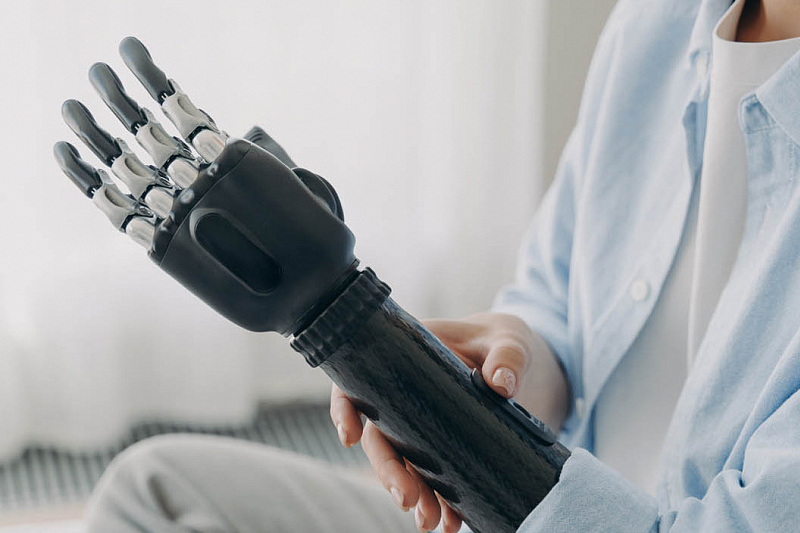
Anti-Friction Solid-Film for arm and hand prostheses
Such complex and expensive devices like the up-to-date prostheses must be as quality and durable as possible.However, any moving mechanisms which were neither protected on the assembly stage, nor subjected to further maintenance, wear out fast.
That is why exactly the prostheses manufacturers use various service materials that enable to improvecharacteristics of these devices, and to extend their service lifetime.
The standard greases were used previously while mounting and maintaining the prostheses, however they weresqueezed out of the friction zones fast, and lost their properties. Besides, those greases made the adjoining areas of the prosthesis, and the persons’ clothes dirty, and were not health harmless because of toxic evaporations.
The Modeling & Engineering Russian company, whose specialty is which is designing and producing Anti-Friction Solid-Film coatings, has offered an efficient alternative for the conventional materials.
The MODENGY coatings product line unites the innovative materials based on solid lubricating substances of thevarious chemical nature. They are spread evenly in the binding substance, and are often combined complementing and enforcing each other.
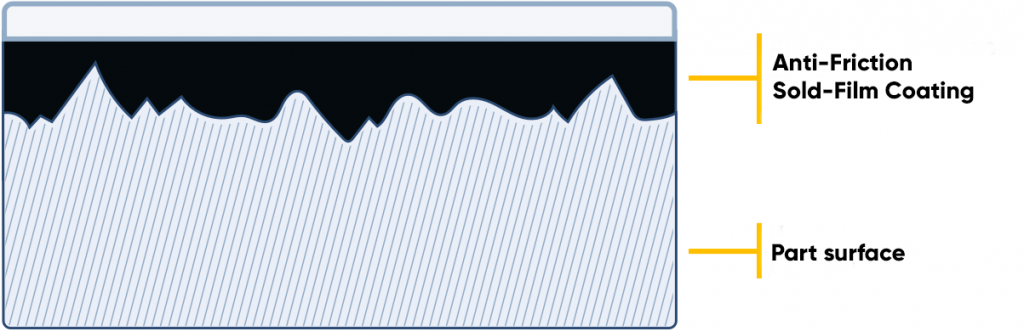
The MODENGY coatings form a thin but strong protective layer on the parts which is a polymer matrix with the solid lubricant particles located in its cells. The coating film makes the surface even by filling the cavities of its microroughnesses, and increases its supporting area, and load carrying capacity.
At production of the up-to-date arm and hand prostheses, MODENGY 1014 coating is actively used nowadays. Itis applied onto the spiroid gear drive, reduces friction of the contacting elements, and prevents their premature wear.
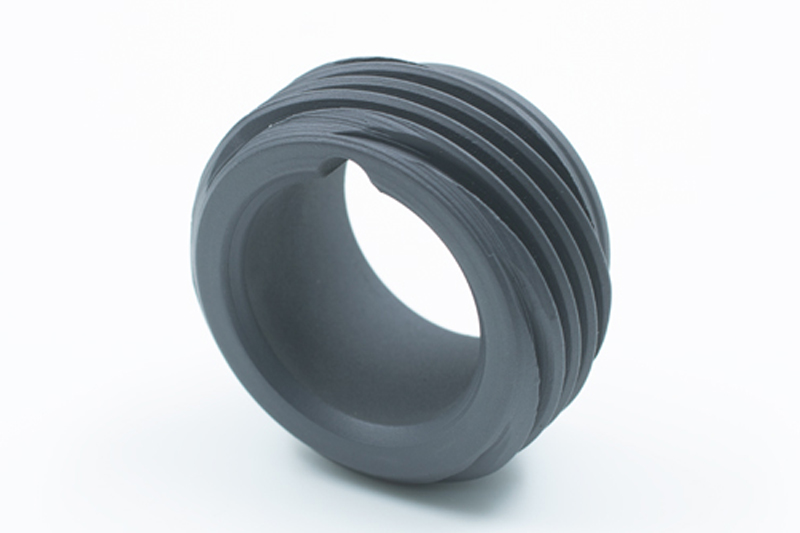
MODENGY 1014 has excellent adhesion and unique set of properties:
- Low friction coefficient
- High load carrying capacity (2,700 MPa)
- Wide service temperatures range (-75 to +255 °С)
- Anticorrosive properties
- Operability in dusty environment
- Longterm service life
MODENGY 1014 is applied as a thin layer onto the previously prepared surface, and gets cured at heating up to +200 °С within 40 minutes.
It is the best to use MODENGY Special Cleaner-Activator to clean and degrease the parts of the spiroid geardrive.
Due to molybdenum disulfide and PTFE in its composition, MODENGY 1014 coating is resistant to abrasion, andthus it requires no to be applied repeatedly. This is what differs it beneficially from the ordinary greases.
Besides, the fully cured ASC leaves no traces, and is absolutely non-toxic which enables the prosthesis user tofeel as comfortable as possible.
For more detailed information, and to get a consultation, please contact our experts.
Request information