







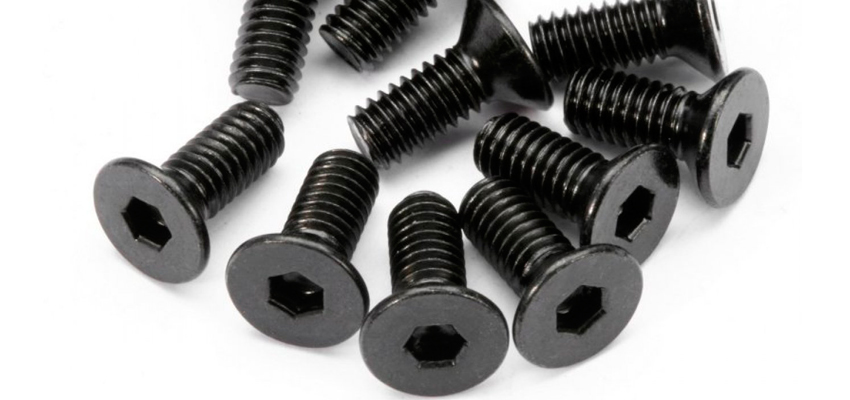
Introduction. Requirements towards fastening items
Quality tightening of the threaded connections is impossible without taking into account their friction performances. To provide the estimated tightening force, the connection should have the given and stable tightening coefficient.
However, the fastening items are often operated under rather severe conditions – within wide temperature range, exposed to vibrations, and impacted by corrosively active environments. But even at such mode they must keep their mechanical properties and friction performances for a long while.
If you use fasteners that don’t meet the requirements listed above, it might lead to a number of typical issues:
- Because of uncontrollable friction in the thread, the connection is found out not to be tightened up to the required force, or in the contrary to be overtightened involving the corresponding consequences while further operation
- Uneven tightening of flanged connections causes deformation of the joint and tightness loss
- Fastener corrosion leads not only to change of its mechanical properties, and non-aesthetic appearance, but also to complicated dismantling while the following maintenance
- As a result of high vibration loads, and micro displacements of the immovable connections, fretting corrosion, a type of wear which is dangerous because it takes place in a hidden way till a certain moment, occurs.
PTFE coating efficiency
One of the efficient ways to improve reliability and durability of the fastening items is to use the coatings providing them with a set of required operational properties.
The Russian MODENGY company has designed a series of such coatings based on polytetrafluorethylene (PTFE). They provide high level of corrosion protection for a fastener even at being operated under marine climate conditions.
Being integrated into the coating structure, the finely dispersed PTFE particles effectively stabilize friction at assembly, eliminate the thread galling effects.
MODENGY coatings areapplied in a practically convenient method of paintingin centrifuges, or by spraying out followed by curing in the kiln. Depending on the task, a coating thickness can be adjusted, but in most cases it is within 5 to 15 µm range. If a coating of big thickness is required, it is possible to apply several layers with some pauses in between for drying for each one.
Types of MODENGY PTFE coatings
Table 1 presents the typical performances of MODENGY PTFE coatings for fastening items.
Table 1 Typical performances of MODENGY PTFE coatings
| MODENGY coating number | Anti-friction fillers | Colour | Service temperature range,°С | Load carrying capacity (SRV test), MPa | Corrosion protection (test in salt mist) acc. to, at least | Drying temperature and time, °С, minutes |
|---|---|---|---|---|---|---|
| 1010 | PTFE | Glossy black | -70... +250 | 1250 | 500 | +180, 60 |
| 1011 |
PTFE |
Silver | -70... +250 | 1250 | 500 | +180, 60 |
| 1014 | PTFE, molybdenum disulfide | Gray | -75... +255 | 2700 | 672 | +200, 40 |
MODENGY 1010 coating give an item an aesthetical glossy black colour (see Fig.1). The coating formula enables to provide optimal balance of anti-friction and anti-corrosive properties. During the tests on M10 fastener with 10.9 strength class, friction coefficient had a variation below ±0.01 during five assembly/dismounting cycles.
This demonstrates the coating capability to reduce and stabilize friction. Similar measurements done on the uncoated fasteners showed that friction coefficient variation differed up to two times. This means that actual tightening force at tightening a fastener without coating with the same torsion torque may differ up to 2 times.
MODENGY 1011 has similar characteristics with those of MODENGY 1010 but its colour is silver.
MODENGY 1014 coating is characterized by increased anti-corrosive and enforced extra pressure properties, due to adding molybdenum disulfide, a wide-known solid lubricating material of layered crystal structure, to its composition. Due to this material, the coating has specific grey colour.
Corrosion protection level of MODENGY 1014 coating has been brought up to value of 672 hours, according to the data of the accelerated tests in salt mist. This index can be significantly increased by preparing the surface prior applying the coating in some additional way such as phosphating, for example.
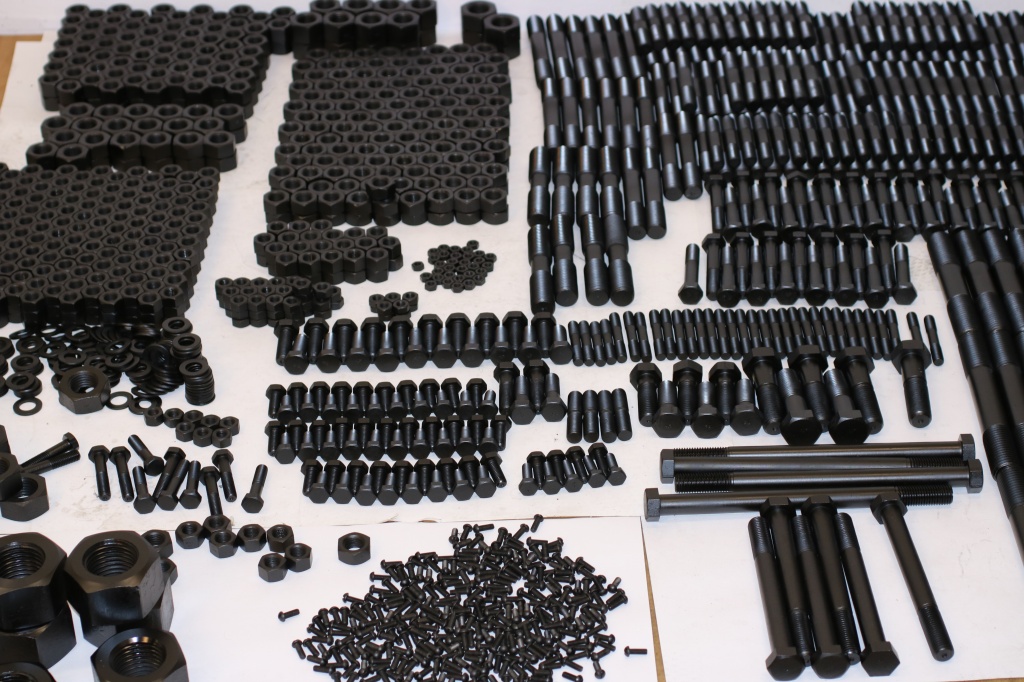
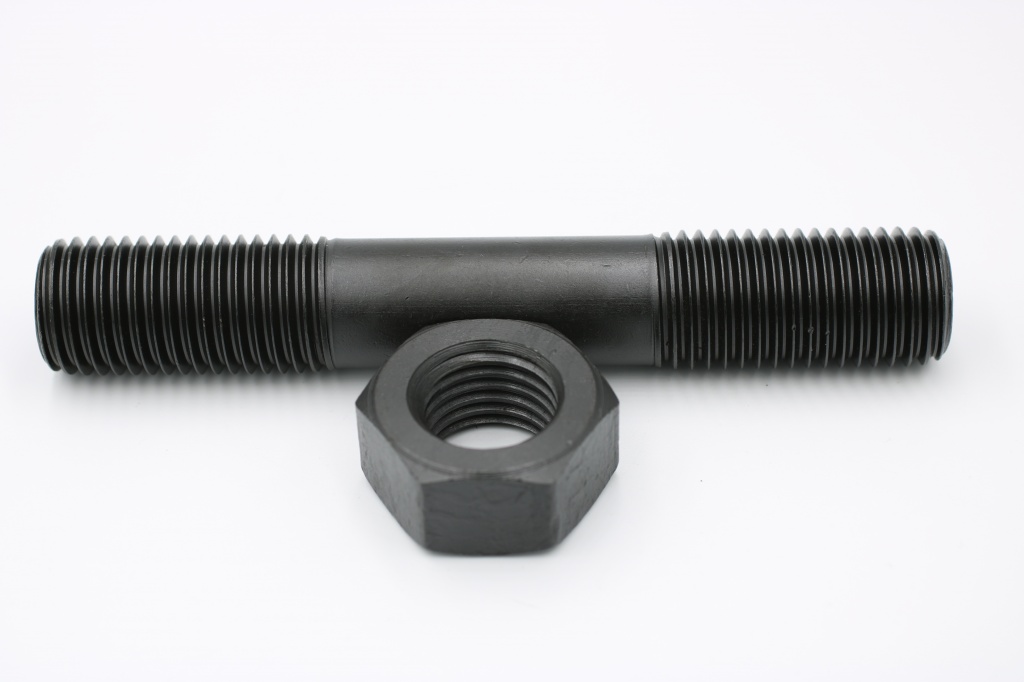
Fig. 1 Appearance of MODENGY 1010 PTFE coating on the fastening items
CONCLUSION
Application practice of the PTFE-based coatings on fasteners has shown their high efficiency. This is due to the unique combination of the following properties:
- High level of anticorrosive protection
- Resistance to chemically aggressive media such as acids, alkalis, oil products
- Stable friction characteristics
- Extra pressure properties
- Easy and convenient way to apply
The coatings of this type are widely used abroad. They are getting more available for the domestic enterprises, too, due to the Modengy company which has arranged these products production at its own formulations in Russia. The manufacturing facilities where MODENGY coatings applying is done are located in Bryansk.
What certain type of the coating to choose depends on the task to be solved, item design, and operating factors. The brief review presented here will help you to navigate among the main types of the coatings, and to select the optimal option for a certain application. For more information contact the Modengy company, please.