







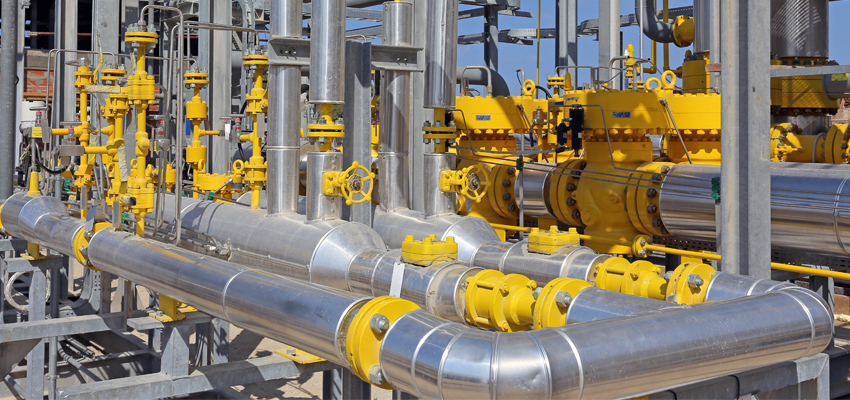
High contact pressures and temperatures, chemically aggressive operating environments are frequently standard operation conditions of the up-to-date machines. The solid lubrication technology is getting more and more relevant to protect the parts exposed to adverse environmental factors.
The materials that are produced according to this technology unlike the conventional liquid lubricants and greases enable to create the friction units that require no maintenance. They are effective at temperature up to +600 ºС, contact pressure above 2,500 MPa, and demonstrate the lowest possible friction coefficient (starting with 0.03).
The solid lubrication technology is realized in the Anti-Friction Solid-Film Coatings (ASC). A wide range of the Anti-friction Solid-lubricating Coatings aimed at solving the most acute tasks of friction and wear has been developed by Modengy company in Russia. More than 16 types of the coating, in formulas of which solid lubricants of different chemical nature and structure are used, are available today.
The Anti-Friction Solid-Film Coatings allow to abandon liquid lubricants and greases completely since they are applied just once and provide required lubrication and protection for the surface for the whole service lifetime of the items.
Experience of MODENGY coating application in valve engineering has proved their high operational properties and efficiency.
For example, use of MODENGY 1001 AFSLC based on molybdenum disulfide in the energy industry pipelines has enabled to reduce the shutter drive force down to 5 times (see Fig.1).
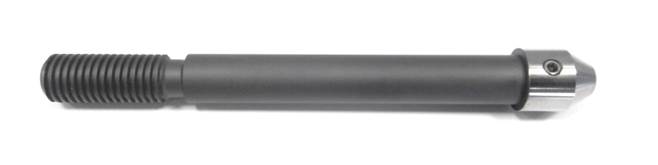
Fig.1. A valve rod covered with MODENGY 1001 based on molybdenum disulfide
Applying MODENGY 1005 AFSLC, a heat curing coating, onto the rack gearing of the axial type valves minimizes the friction losses. Due to high load carrying capacity and anti-scuff properties, this coating withstands contact pressures above 2,000 MPa that these units are exposed to. (see Fig.2)
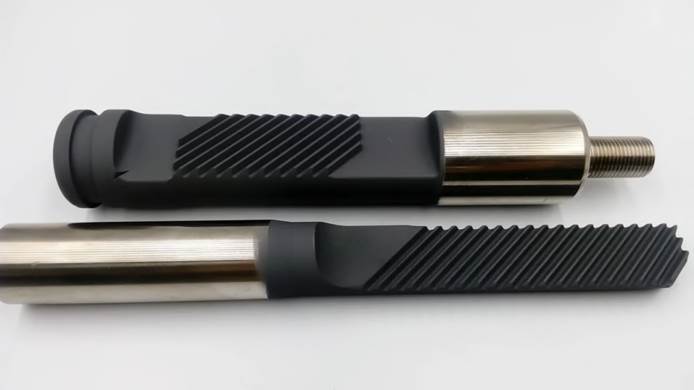
Fig. 2. The parts of the rack gearing of the axial type valve covered with MODENGY 1005 based on molybdenum disulfide
MODENGY 1014 based on polytetrafluorethylene (PTFE) and molybdenum disulfide is applied onto fastener elements for the purpose of corrosion protection (see Fig. 3). Unlike electroplate, Anti-Friction Solid-Film Coatings is resistant to wear and keeps operating after repeated mounting-dismantle cycles. Besides, MODENGY 1014 stabilizes the screwing coefficient, and doesn't allow for thread galling.
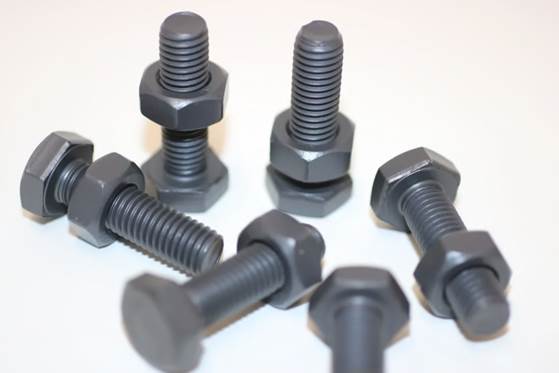
Fig.3. Fasteners covered with MODENGY 1014 based on PTFE and molybdenum disulfide
PTFE content enables the coating to operate effectively not on metals only but also in friction pairs which include rubber and plastic. This ability has defined widespread use of MODENGY 1014 in pneumatic drive cartridges to prevent rubber from sticking to metal, stick-slip motion to arise, and to extend the part service life significantly. (see Fig.4).
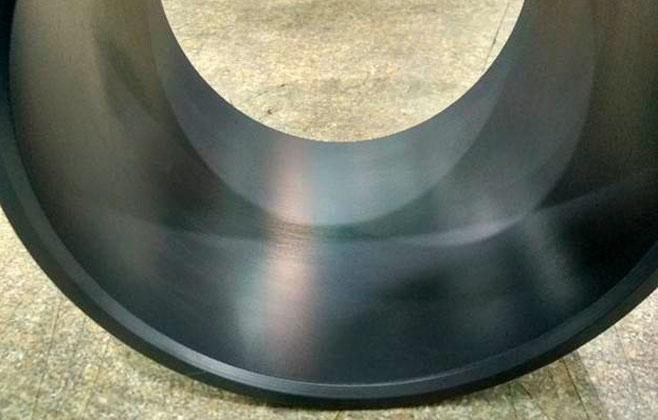
Fig.4. A pneumatic drive cartridge covered with MODENGY 1014 on PTFE and molybdenum disulfide
MODENGY 1014 coating has successfully passed testing for chemical resistance according to GOST 9.403-80, and thus, it can be used under conditions of aggressive environments.
The examples described above demonstrate that the Anti-Friction Solid-Film Coatings energy efficiency of the items.
The solid lubrication technology enables to create the friction units that require no maintenance, are able to operate under conditions of aggressive environments for a long while, at high loads and temperatures.
More than that, this technology is easy to implement and involves the standard painting equipment to be used.
For more detailed information, and to get a consultation, please contact our experts.
Request information