







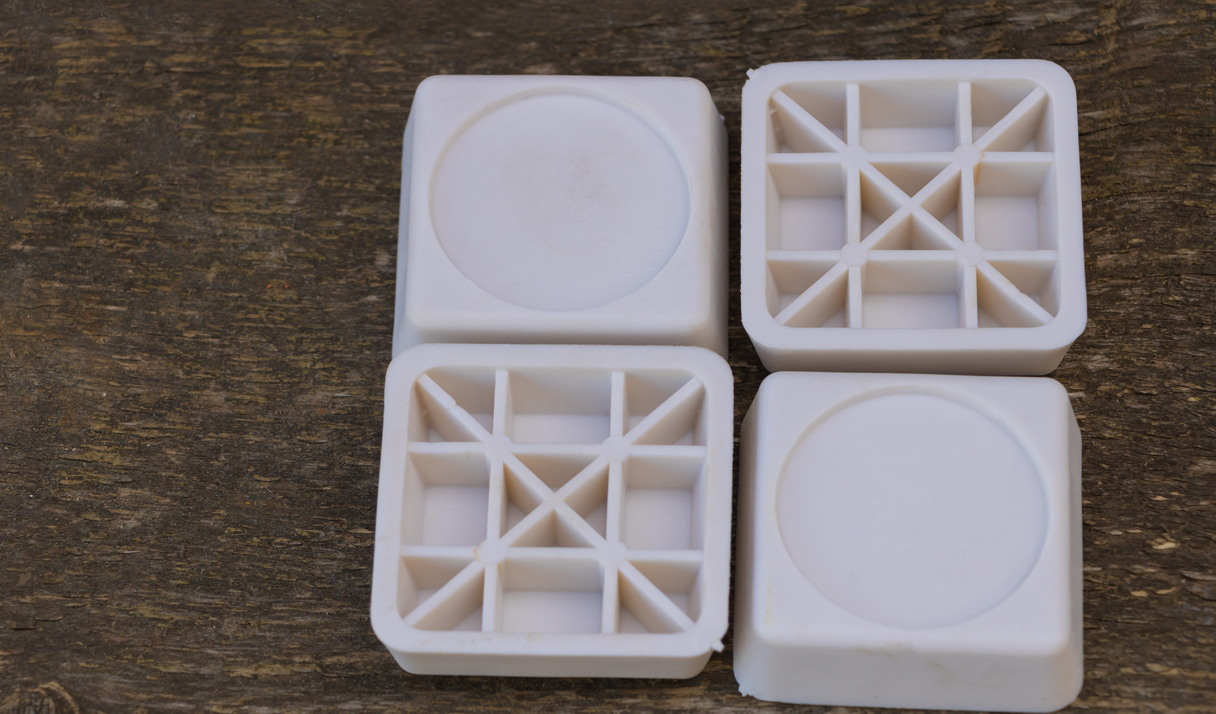
Anti-vibration trivets are intended to reduce variating, and to eliminate side sounds in process of household appliances operating. They are often set under washing machines, and fridges.
These trivets must be resilient and nonslip that’s why they are produced of silicone. The final appearance is given to the elements by using the moulds, the metal containers whose hollows get filled in with melted silicone material. After cooling down and taking out of the moulds, the items are ready to be used.
The common issue that the producers of the anti-vibration trivets face is melted silicone sticking to the metal surface of the moulds.
To make taking the finished items out of the moulds easier, and to prevent getting defective products, the moulds producers use the anti-sticking coatings as a rule containing polytetrafluorethylene in their composition.
However, after a certain term of operating, the separating layer on the equipment gets damaged what inevitably leads to silicone sticking. As a result, production quality of the trivets drops, need in constant cleaning the accessories from the residues of the polymer material arises.
To restore the protective coating on the moulds, MODENGY 1010 coating is used. It forms a smooth anti-adhesive and anti-sticking layer on the parts that separates metal and silicone.
Due to glossy texture of the protective layer, transparency of the finished items is not broken as it might happen after using matt anti-adhesive coatings.
MODENGY 1010 is applied by the standard painting methods, and polymerizes at heating in a kiln.
Use of this coating enables to prevent items damaging in process of the moulding and taking out of the moulds as well as to eliminate labor-consuming process of cleaning the equipment from the silicone residues.