







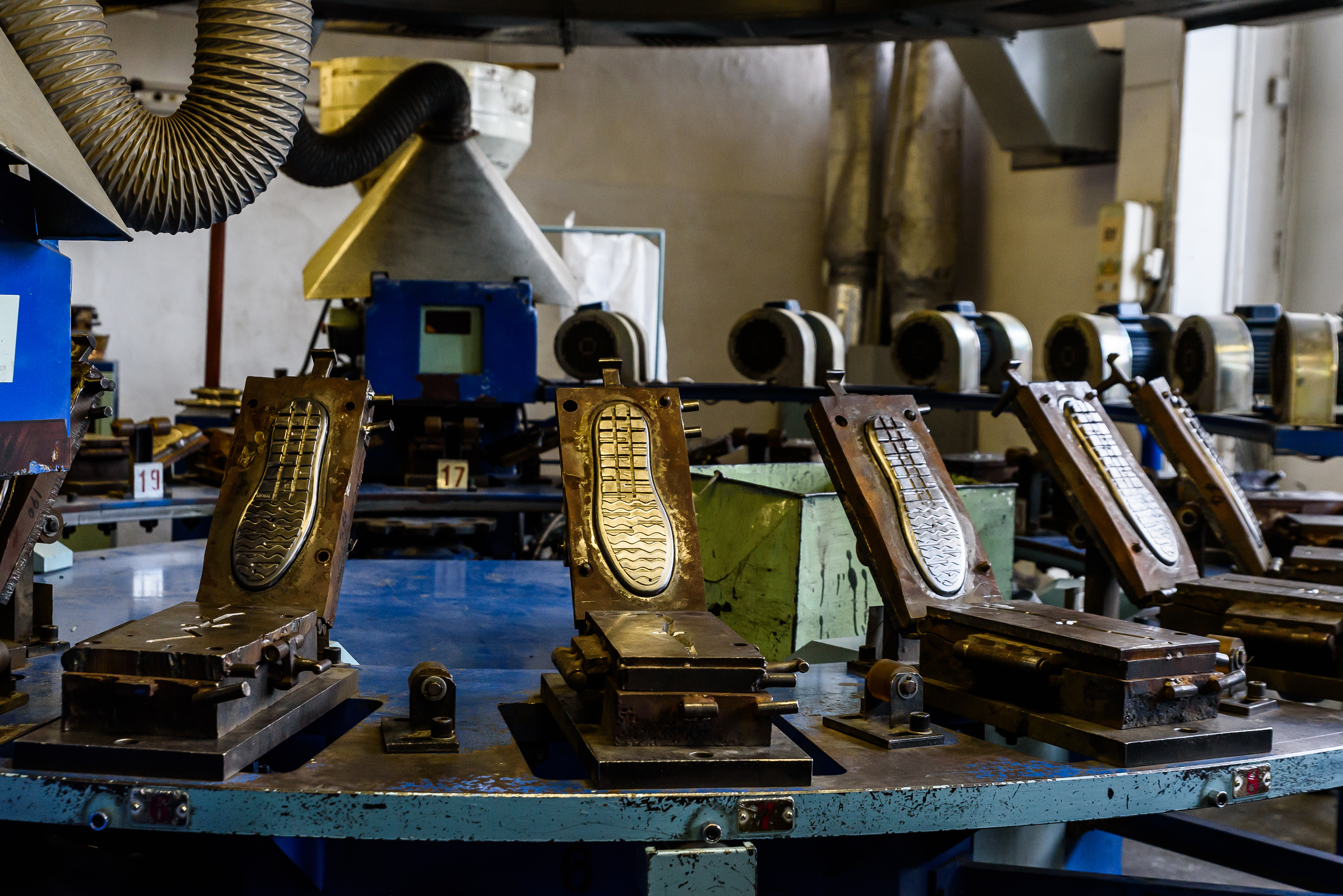
Shoes productions very often make the soles of their items of polyurethane. The choice in favour of this material is conditioned by its not high prime cost, very low weight, good heat insulating properties, and flexibility. The shoes with such sole withstand small shock loads, and are wear resistant enough.
The required form is given to polyurethane by extrusion method. The melted material is passed through the special molding equipment. The extruder screws, the oblong cone-shaped tools with turns on their surface, are responsible for moving polyurethane.
In the process of casting, the polymer material sticks onto the screws which leads to substance complicated moving, and to getting defective products. The enterprises incur time and finance losses because of stopping processing line to clean the tools – stuck polyurethane has to be removed every two hours.
The silicone greases are applied onto the molds and screw devices as separating agent. However, they don’t withstand high temperatures, burn out fast, are washed away, require frequent renewing. Besides, traces of the lubricating material can remain on the finished products what requires additional procedures to clean them.
An effective solution for the shoes productions is applying MODENGY 1007 anti-friction solid-film coating onto the extruder screws and molds. The smooth texture of this material prevents melted polymer sticking onto the device. The coating has high separating properties, resistance towards washing away and exposure to aggressive substances, withstands temperature up to +350 °С.
After material polymerization, a resistance dry layer is created on the screws and molds surfaces that requires no renewing for the whole period of operating the equipment.
Learn more about this application in the Portfolio.