







At the present, a number of tendencies have been revealed in developing friction units of the machines. In particularly, the following ones:
- Dimensions reduction with corresponding increase of contact pressure
- Increase of the rate of parts relative displacement
- Service temperature range expansion
- Providing possibility of operating in chemically aggressive media
- Creating friction units that require no maintenance
- Toughening requirements towards energy efficiency
- Improving safety for nature environment and human beings
Indeed, friction units of the modern machinery often have to operate at cryogenic temperatures or at up to +500 °С and more, under conditions of vacuum, being exposed to radiation or aggressive chemicals. Development of robotics and electric vehicles adds its requirements towards reducing friction loss what is related directly to autonomy of these machines.
At the same time, the materials and technologies to reduce friction must minimize maintenance of units, and be safe for nature environment at operating. It’s obvious that well-known conventional lubricating materials and oils are not able already to satisfy the increased requirements. This is the reason why an intensive development of the solid lubrication technology has been remarking for several recent years.
Solid lubricating materials and coating based on them
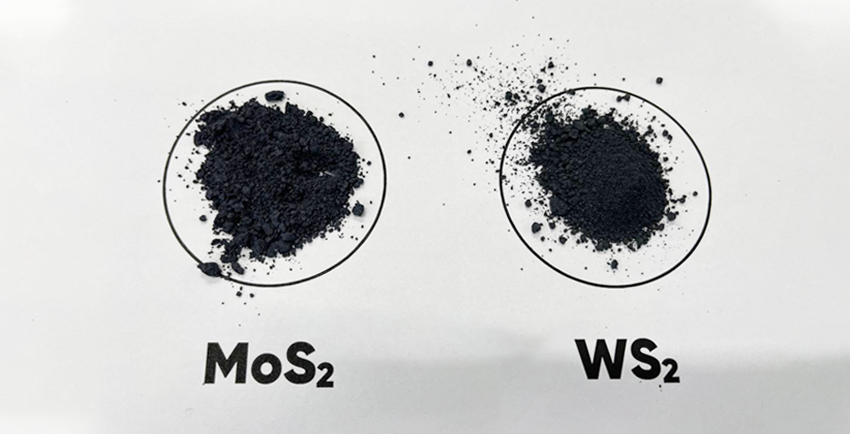
Some solid materials in form of powder were started to be used as lubricating ones back in the last century. They include substances with a laminated crystal structure (molybdenum disulfide, graphite), some polymers (polytetrafluorethylene), soft metals (silver, gold, lead). Recently, use of tungsten disulfide, and diamond-like carbon has been also remarked.
In particular, tungsten disulfide is able to provide friction coefficient less than 0.05, and to operate within temperature range between -200 °С and +500 °С, withstanding contact pressures up to 3,000 MPa. However, use of materials in form of powder to get effective and long-term lubrication is not enough already. That’s why various ways of integrating them into friction surface have become the next stage of development of this technology.
One of such ways is use of solid-film coatings. In their initial form they are suspension of powders of solid lubricating materials, a binder and a solvent. After applying by the method of painting, and curing, a composite layer of 25±5 µm thickness forms on the surface. It is a matrix of the binder with highly dispersed particles of solid lubricating materials distributed over its cells (see Fig.1). As a rule, the binding substances used, and the coating itself have significantly less hardness than the surface they are applied on (steel, iron cast, bronze, brass, and others) Nevertheless, the coating adhering firmly to the base demonstrates high compression resistance and low shear resistance. All the matter is that at the given values of thickness the base accepts normal load, and the coating works in shear. This allows to the given technology, at all its ease of implementation, to provide high efficiency in the part of reducing friction and wear within wide range of operational conditions of the unit.
The Modengy company (Bryansk town) has designed a series of such coatings for various friction conditions, and releases them under MODENGY trade mark. The composition of the coatings includes the solid lubricating materials mentions above as well as the binders of organic and non-organic nature such as epoxy and phenol-formaldehyde resins, polyamide-imides, polyurethanes, silicates as well as aluminum-phosphate and aluminum-chromium-phosphate binders. Next, we are going to consider a number of examples of these coatings application.
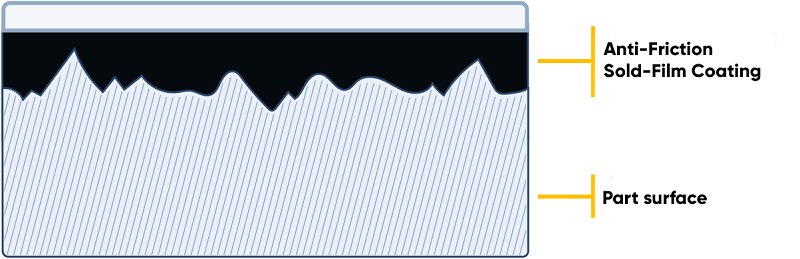
Fig.1. Scheme of the coating structure
Application of the solid-film coatings
One of the examples of successful application of the coatings is the slide friction units of the shut-and-control pipeline valves in heat power engineering. The features of these units operation include:
- High contact pressures, and low slide speed
- Service temperatures more than +300 °С
- Long downtime between operation cycles
Friction loss at valves operation is always in spotlight for the developers since it directly affects the efforts for opening-shutting the shutters, and the required power of the actuating mechanisms. The greases that are used are of little effect under the described conditions.
The tests for defining the opening-shutting moments on a regular lubricant, and with applied MODENGY 1001 and MODENGY 1004 coatings based on molybdenum disulfide at dry friction have been held at the manufacturing plant making the S.KZ valves. The photos of the treated valve parts are given on Fig.2. The diagram on Fig.3 represents these tests results. The moments of the valve opening and shutting have not only reduced by 5 times but get stabled, too.
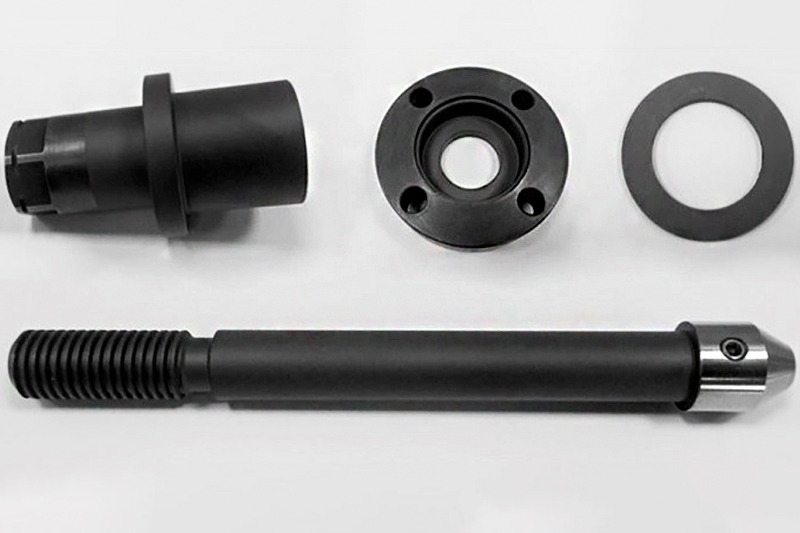
Fig.2. The parts of the shutting valve with the coating applied
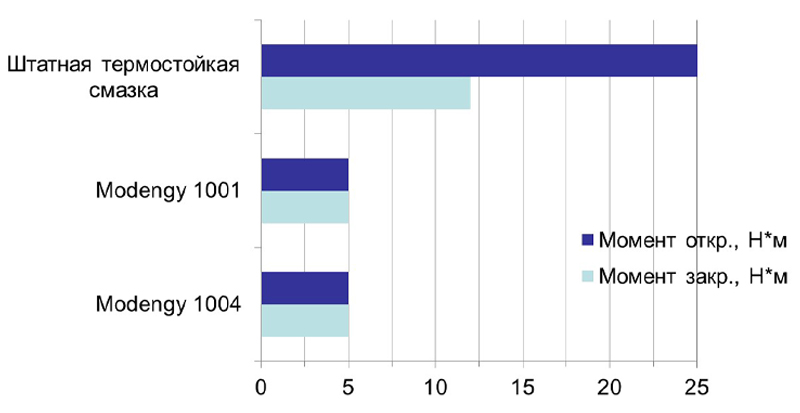
Fig.3. The results of measurements of the valve opening and shutting moments
Another example of using the coatings is piston skirts of the internal combustion engines. Here the coating performs function of additional protection against wear and scuffing in the moments of oil starvation at starting the engine and at overheating, makes running-in easier. Use of such coatings is already getting a kind of the standard in the propulsion engineering taking into account the grown requirements towards economy and power of the engines.
There is a series of MODENGY coatings to solve these tasks. Extensive researches of them with modeling operational conditions for the cylinder-and-piston group were help at the Mechanics Issues Institute named after A. Ishlinsky of the Russian Science Academy. In Table 1, an extract out of the researches results are given in the form of the friction coefficient values on the samples imitating a cylinder-and-piston pair. As you can see, in absence of the coating, friction coefficient significantly increases, and the load, at which friction force exceeds the limit values for a measuring system, decreases. On Fig. 4, the photo of the pistons with the applied coatings is presented.
Table 1. Tests Results
|
Coating Name |
Friction coefficient at normal load, N |
||||
|---|---|---|---|---|---|
|
|
50 |
120 |
250 |
350 |
450 |
|
No Coating |
0,69±0,08 |
0,58±0,06 |
-* |
-* |
-* |
|
0,22±0,07 |
0,17±0,05 |
0,17±0,03 |
0,13 |
0,12±0,03 |
|
|
0,16±0,03 |
0,11±0,01 |
0,11±0,01 |
0,10±0,02 |
0,11±0,02 |
|
|
0,13±0,05 |
0,12±0,01 |
0,11±0,03 |
0,12±0,02 |
0,11±0,01 |
|
|
0,12±0,04 |
0,10±0,02 |
0,10±0,01 |
0,10±0,01 |
0,11±0,02 |
|
* – friction force has exceeded the limit value for the measuring system.
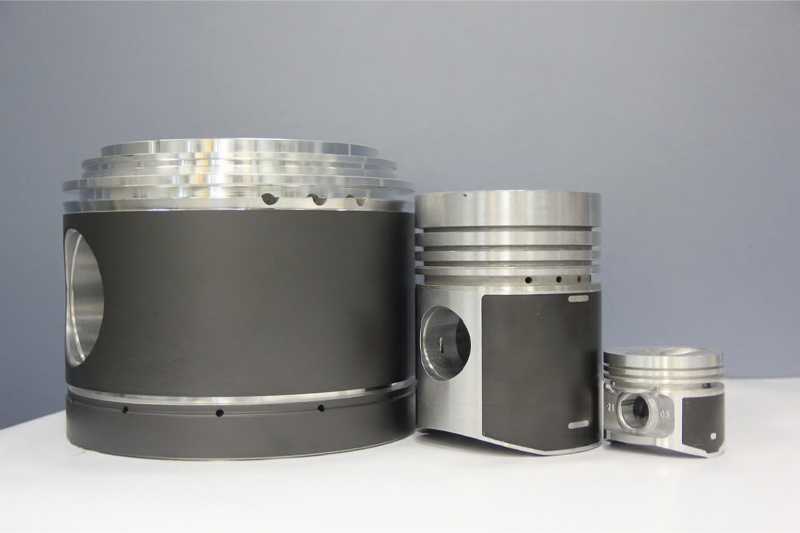
Fig.4. Pistons coated with MODENGY solid-film coatings
At the Southern-Ural State University, research of the engine sliding bearings are being held by the scientific group under the leadership of Mr. I. Levanov, the Candidate of the Technical Sciences. According to their results, it has already been revealed that use of the solid-film coatings on the standard bushings of the connecting-rod bearing allow to improve its ‘survivability’ up to 5 times. Here, the ‘survivability’ stands for a period of time during which a bearing keeps its operability after emergency oil supply shutdown. These researches are also related to implementation of the ‘stop-stop’ systems which enable to save fuel but at the same time they toughen operational conditions of a friction unit. At starting-stopping, they operate in the mode of boundary or semi-liquid lubrication.
The results of these tests were presented at the METS-2021 Conference.
In addition to the described examples, MODENGY solid-film coatings have found their application in oil-and-gas equipment (in particular, on the threaded connections of the drilling and pump-and-compression pipes), sliding bearing of the load-lifting and earth-moving machinery, sliding guideways of stamps and molds, fastening items of specialty purpose, robotics, pneumatic drivers, screw compressors, and others.
Development prospects of the solid-film coatings technology
From all said above, it is obvious that the solid lubrication technology and its realization in the form of the solid-film coatings enables to create more efficient and improved friction units, and it meets the requirement towards the modern machinery, in general. However, there are already some new challenges for today. Let’s consider them by example.
Direction of the space-saving high-speed energy machines is actively developing recently in our country. The petal gas-dynamic bearing (PGB) are used as the rotor supports in them. They need additional lubrication at starting and stopping. At the same time, the operational conditions are such that they completely eliminate possibility of application any other lubrication but solid one. They are high contact pressures, sliding speed more than 15 mps, service temperatures between -50 °С and +500…600 °С.
None of the solid lubricating materials known for today cannot operate effectively under these conditions, especially when it concerns a temperature range. Friction coefficient of molybdenum disulfide increases significantly at temperature higher than +300..+350 °С because of the oxidation with forming molybdenum trioxide. To realize lubrication mechanism, graphite requires moisture presence in it which evaporates at temperatures higher than +200…+250 °С. Oxides of some metal and calcium fluoride, on the contrary, reveal lubricating properties in the high temperature zone only – more than +400 °С.
That’s why solution of the given task lies in the field of combining the solid lubricating materials with various additives, and creating reversible adaptable coatings. It’s not enough just mix molybdenum disulfide and metal oxides since then we will get an irreversible adaptable coating that will lose its operability as soon as it is retrieved from the high temperature zone. It is required to be so that this coating forms new structures while going through certain temperature limits.
Certain success in this field has been achieved at the Modengy’s scientific-productive center. On Fig. 5, an extract out of the test results of MODENGY coatings applicable to the friction condition of the PGBs held at the Moscow Aviation Institute is presented. Looking at the graphs for the reversible adaptable coating 2 and 3, it is possible to track the process of adaptation to the changing temperature. At the same time, for the basic variant 1 based on graphite, the optimal temperature mode within +100…+300 °С range is clearly seen, and beyond it the coating efficiency reduces significantly. On Fig. 6 the photo of PGB elements with applied MODENGY coating is presented.
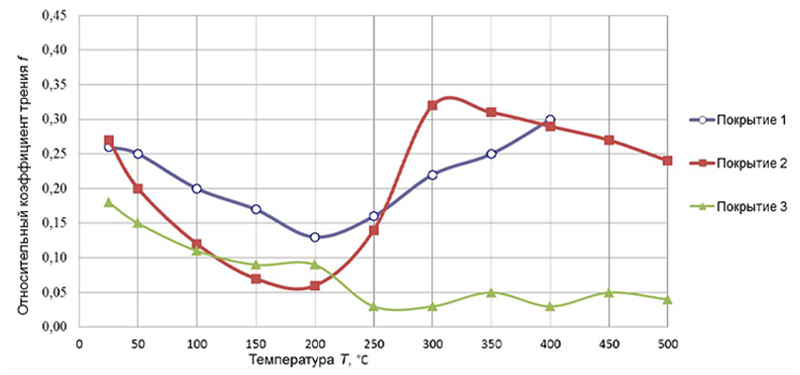
Fig.5. The results of the coatings test in the form of the friction loss dependence on temperature (coating 1 – basic coating based on graphite, coating 2 – the first version of the reversible adaptable coating, coating 3 – improved version of the reversible adaptable coating)
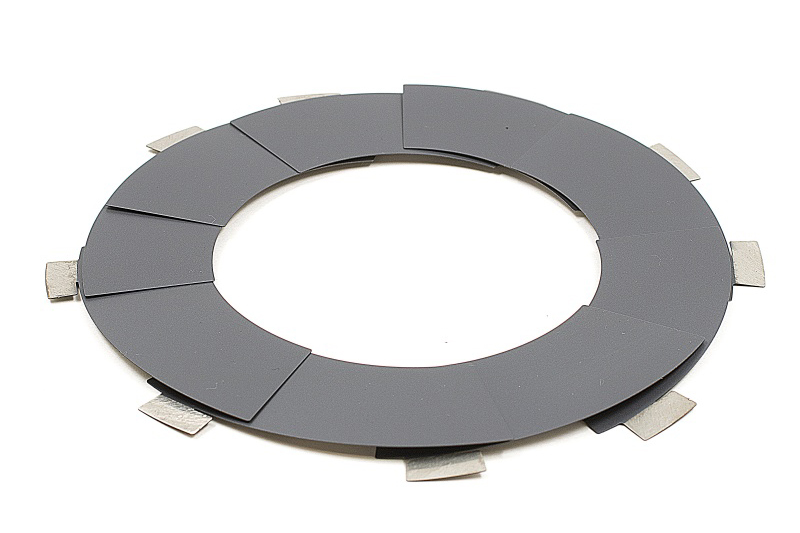
Fig.6. The PGB elements with applied MODENGY coating
Conclusions
Today, the solid lubrication technology and its realization in the form of the solid-film coatings help to satisfy ever-increasing needs of the modern machinery. And their further development take place in the form of creating reversible adaptable coatings that change their structure depending on the operational conditions such as humidity, temperature, and other factors of external environment. Such coatings can operate under much more expansive conditions range opening up new reserves concerning the tribotechnical properties level.
For more detailed information, and to get a consultation, please contact our experts.
Request information